Product Description
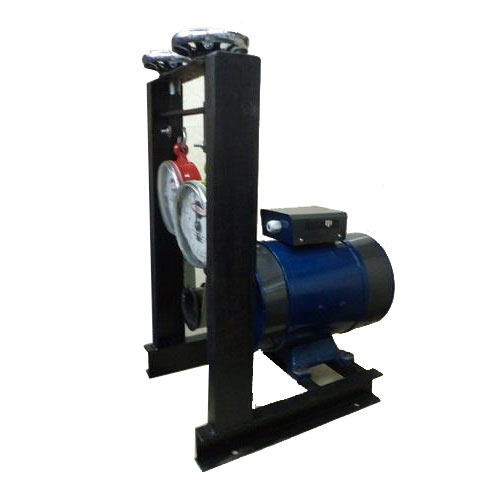
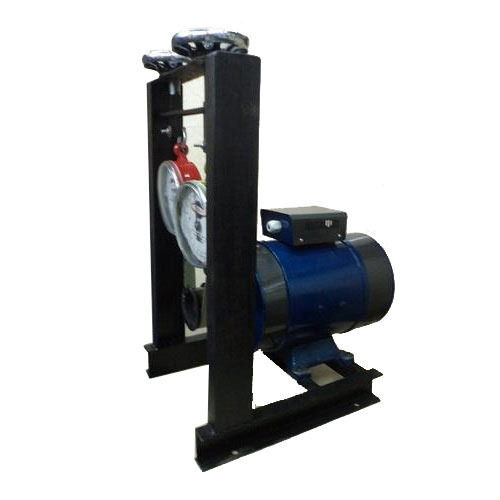
DC Motor with Mechanical Loads
Backed by a team of dexterous professionals, we are engaged in manufacturing, exporting and supplying a wide range of DC Motor with Mechanical Loads. We professionals manufacture this motor by making use of optimum quality components and contemporary technology in conformity with international standards. In order to deliver defect free range at client's end, this is stringently tested by our quality controllers against various parameters.
Features:
- DC Motor with Mechanical Loads Are Efficient performance
- DC Motor with Mechanical Loads Are Optimum functionality
- DC Motor with Mechanical Loads Are High torque speed
Showcase Motor Performance Safely and AccuratelyThis apparatus allows educators, students, and engineers to safely demonstrate the performance and load characteristics of DC motors. Its built-in short-circuit and overload protection, anti-slip rubber feet, and durable powder-coated finish make it suitable for repeated classroom or laboratory use. The inclusion of digital display and adjustable frictional load system provides precise and flexible experimentation conditions.
Comprehensive Accessories for Complete ExperimentsEvery unit comes with essential accessories, including variable load weights, connecting leads, and an instructional manual. The mechanical load mechanism and 4mm safety sockets allow for quick setup and easy adjustment, ensuring an efficient teaching or demonstration experience.
FAQ's of DC Motor with Mechanical Loads:
Q: How does the adjustable frictional brake or pulley system work on this DC motor apparatus?
A: The apparatus uses an adjustable frictional brake or pulley system to apply mechanical loads to the DC motor. By varying the resistance or weight, users can observe how the motor responds to different loads, making it ideal for performance curve and load characteristic demonstrations.
Q: What are the primary benefits of using this DC motor demonstration unit in an educational setting?
A: This equipment enables clear visualization of critical motor characteristics, such as efficiency and speed under varying loads. Its robust construction and safety features promote safe, repeated demonstrations, while the digital tachometer ensures accurate real-time data tracking for students and educators.
Q: When should overload and short-circuit protections be utilized during operation?
A: Overload and short-circuit protection features are automatically engaged if excessive current flows through the system, preventing damage to the motor and enhancing operator safety. These protections are continuously active during operation, ensuring safe usage even under demanding mechanical loads.
Q: Where can this laboratory apparatus be installed or used effectively?
A: The unit is designed for bench-top installation and is suitable for school and college laboratories, technical institutes, and industrial training centers. Its anti-slip rubber feet and compact rectangular form allow stable placement and safe operation on most work surfaces.
Q: What is the process for setting up and using the DC motor with mechanical loads?
A: To set up, place the apparatus on a flat surface, connect the power supply (12V/5A DC regulated), attach the load weights or adjust the frictional brake as desired, and connect measuring instruments using 4mm safety sockets. The motor can then be operated in continuous or intermittent mode while users monitor speed and load via the digital tachometer.
Q: Can this DC motor apparatus demonstrate different types of load characteristics?
A: Yes, by adjusting the brake or attaching various weights, users can simulate different mechanical loading scenarios. This capability allows for comprehensive exploration of torque-speed curves and other key performance indicators, critical for both demonstration and research purposes.
Q: What materials ensure the durability and safety of this demonstration apparatus?
A: The unit features a mild steel frame, aluminum motor housing, and steel shaft for mechanical strength. Its powder-coated finish protects against corrosion, and the insulation class B rating allows for safe operation in laboratory environments up to 60C.







 English
 Spanish
 French
 German
 Italian
 Chinese (Simplified)
 Japanese
 Korean
 Arabic
 Portuguese


 Send Inquiry

