Product Description
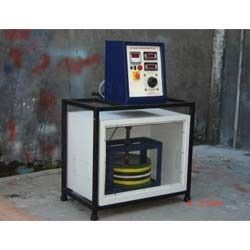
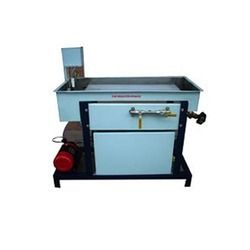
We are engaged in offering high quality Composite Walls Apparatus to the esteemed customers. These apparatuses are manufactured using genuine raw material, under the able guidance of our team of experts. Moreover, we make sure to timely deliver the ordered products at the customers' end, via our wide distribution network.
Features:
Precision Thermal AnalysisThe Composite Walls Apparatus is engineered to facilitate the study of heat transfer through different wall materials, making it vital for both research and academic laboratories. Stainless steel construction guarantees robust performance, while the accurate control of voltage and temperature ensures reliable experimental results. Whether for learning or advanced research, this apparatus enhances thermal analysis procedures.
User-Friendly Laboratory DesignWith its compact form factor and lightweight design, the apparatus is easy to transport and set up in various laboratory environments. The broad voltage compatibility (110-220V) allows use in institutions with different electrical standards across India. Its stainless steel build also ensures safe and easy cleaning, contributing to overall laboratory efficiency.
FAQ's of Composite Walls Apparatus:
Q: How is the Composite Walls Apparatus typically used in laboratories?
A: The apparatus is primarily used to study thermal conductivity and heat transfer properties in composite wall setups. It allows users to observe and analyze the transfer of heat across different material layers, supporting research and academic experiments.
Q: What are the main benefits of using a stainless steel composite walls apparatus?
A: Stainless steel provides excellent durability, resistance to corrosion, and thermal stability, ensuring accurate results and long-term operation with minimal maintenance. Its robust construction also allows safe use under varied temperature conditions.
Q: Can this apparatus be used with both 110V and 220V power supplies?
A: Yes, the Composite Walls Apparatus is designed to operate efficiently with either 110V or 220V, making it suitable for laboratories across different regions in India.
Q: When is the ideal time to use this apparatus during laboratory exercises?
A: This equipment is most effective during experiments focused on understanding thermal conductivity, insulation materials, or composite structures, typically in thermodynamics or material science courses.
Q: Where can I source the Composite Walls Apparatus within India?
A: The apparatus is available through authorized distributors, exporters, manufacturers, suppliers, and traders throughout India. It can be ordered directly from laboratory equipment suppliers.
Q: What is the standard process for conducting experiments using the composite walls apparatus?
A: The standard procedure involves placing different material samples between heated plates, applying the required voltage, setting the desired temperature range (30-80C), and monitoring heat transfer measurements to analyze material properties.
Q: What is the temperature range, and why is it important?
A: The apparatus provides a temperature control range from 30C to 80C, allowing precise simulation of real-world thermal conditions and ensuring compatibility with a variety of experimental requirements.







 English
 Spanish
 French
 German
 Italian
 Chinese (Simplified)
 Japanese
 Korean
 Arabic
 Portuguese


 Send Inquiry

