Product Description
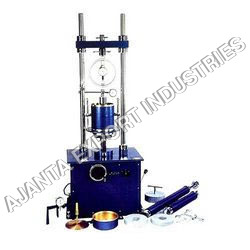
In order to fulfill the ever changing demands of our clients, we have been engaged in offering a quality range of CBR Load Frames. These machines are highly useful in expansion characteristics of soil and find relative bearing ratios that are used for sub-base, base and sub-grade of pavements, roads and run ways. The machines are used for conducting different types of tests on soils, gravel, sand and crushed stone.
- Simple to use
- Easy to adjust
- Complete with stabilizing bar
- Compact, bench-mounting design
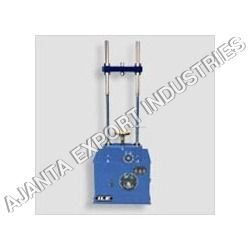
Versatile Display and Control OptionsThe CBR Load Frame is available in both digital and analog models, giving laboratories the flexibility to select the right fit for their testing precision and preference. Control methods include a manual hand wheel for hands-on adjustment or a motorized system for consistent, automated operation.
Robust, Corrosion-Resistant ConstructionEngineered from premium stainless steel, the CBR Load Frame delivers longevity and maintains performance over frequent use. Its rugged build protects against corrosion, making it ideal for continued laboratory use and reducing the need for frequent replacements.
FAQ's of CBR Load Frame :
Q: How is the CBR Load Frame used in soil testing laboratories?
A: The CBR Load Frame is utilized to determine the soil strength and the California Bearing Ratio (CBR), a key parameter in road and pavement design. Laboratories use this frame to apply a controlled load on soil samples and measure their resistance, informing construction and engineering decisions.
Q: What are the display and control options available on this load frame?
A: Depending on the model, the CBR Load Frame features either a digital display or an analog dial for reading test results. Additionally, control can be manual, via a hand wheel, or motorized for automated loading, catering to different operational needs.
Q: When should a motorized control system be chosen over a manual hand wheel model?
A: A motorized control system is recommended when frequent or high-volume testing is required, as it offers consistent loading and minimizes manual effort. Manual hand wheel models are suitable for labs with lower throughput or where budget constraints exist.
Q: Where can the CBR Load Frame be installed for optimal performance?
A: For optimal accuracy and safety, the CBR Load Frame should be installed on a stable, level laboratory workbench in a clean and dry environment. Proper placement also ensures ease of access and minimizes external vibrations during testing.
Q: What is the benefit of the stainless steel construction in this equipment?
A: Stainless steel enhances the durability and longevity of the CBR Load Frame. It resists corrosion and damage from chemicals or moisture commonly present in laboratory environments, ensuring reliable performance over time.
Q: What steps are involved in the CBR testing process with this frame?
A: In the CBR testing process, a soil sample is placed in a mold and pre-soaked as required. The load frame then applies force through a plunger at a controlled rate, and the resistance is recorded via the display. The resulting data reflects the soil's bearing capacity.







 English
 Spanish
 French
 German
 Italian
 Chinese (Simplified)
 Japanese
 Korean
 Arabic
 Portuguese


 Send Inquiry

