Product Description
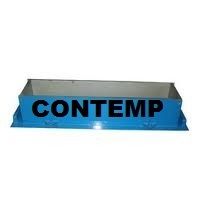
Beam Moulds
Specification:
Beam Moulds for casting, concrete specimens for flexure tests. Made of cast iron. Beam Moulds are made of 4 plates assembled together. Each mould is supplied complete with base plate. Beam Moulds Faces are machined flat to +/-0.2mm and finished in size to 0.2mm
10cm X 10cm x 50cm (IS.516-1959)
Superior Craftsmanship for Accurate TestingOur beam moulds are meticulously engineered with machined surfaces and precisely aligned end plates, ensuring that concrete specimens produced have exact dimensions and square ends. The rigid base structure prevents deformation over multiple uses, making them a reliable choice for strength testing across laboratories nationwide.
User-Friendly Features for Efficient OperationWith detachable side plates and fitted handles, these moulds streamline the specimen removal process and make transportation effortless. The smooth top finish and reusability factor further contribute to hassle-free laboratory operations, even during high-volume testing schedules.
FAQ's of Beam Moulds:
Q: How are beam moulds used in laboratory concrete testing?
A: Beam moulds are employed to shape concrete specimens for strength testing. Freshly mixed concrete is poured into the mould, compacted, and allowed to set. After curing, the detachable side plates enable easy removal of the specimen for further testing.
Q: What materials are beam moulds made of, and how does this benefit users?
A: They are constructed from mild steel, providing strength, rigidity, and durability for repeated use. The machined surfaces contribute to dimensional accuracy and ease of specimen removal.
Q: When should I use a single gang versus a three gang beam mould?
A: A single gang mould is suitable for individual specimen preparation, while a three gang mould allows simultaneous casting of multiple specimens, increasing efficiency during large testing runs in the laboratory.
Q: Where are these beam moulds typically used?
A: These moulds are primarily used in laboratory settings in India for molding concrete beams according to IS 516 and ASTM C31 standards, applicable in research, education, and quality control environments.
Q: What is the process for removing test specimens from the mould?
A: After the concrete has properly set and cured, the side plates can be detached for straightforward removal of the specimen, ensuring minimal risk of damage and preserving the specimen's geometry.
Q: What are the main benefits of using these beam moulds for concrete testing?
A: The benefits include ease of use through detachable side plates and handles, high reusability, dimensional stability from a rigid base, and precisely machined components to ensure consistent, accurate test results.







 English
 Spanish
 French
 German
 Italian
 Chinese (Simplified)
 Japanese
 Korean
 Arabic
 Portuguese




 Send Inquiry

