Product Description
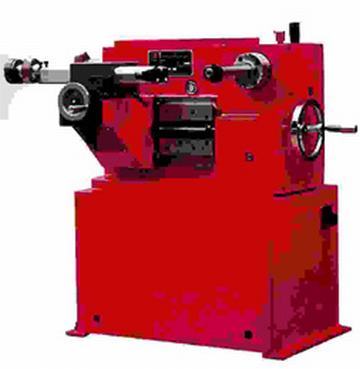
BRAKE DRUM/DISC CUTTING MACHINE
Description:
This equipment is a kind of lathe. It can fulfill the reparation of the brake drum, disc and shoe of automobiles from mini-car to medium trucks. The unusual feature of this equipment is its perpendicular twin-spindle structure. The brake drum/shoe can be cut on the first spindle and the brake disc can be cut on the second spindle. This equipment has higher rigidity, accurate workpiece positioning and is easy to operate. This equipment meets the requirement of standard(GB12064),brake drum cutting machine. If you adopt this equipment, there is no doubt for your enterprise to set up higher reputation due to better process quality and lower process cost. Details: Drum dia Capacity(mm) | 180-450 |
Disc dia Capacity(mm) | <=400 |
Spindle speed(r/min)three grades | 30,50,85 |
Toolpost Travel(mm) | 170 |
Feed Rate(mm/r) | 0.16 |
Motor(kw/rpm) | 1.1/1400 |
Power Requirement | 380V,50HZ,3phases,3A |
Length | 690 |
Width | 790 |
height | 880 |
Net Weight(kg) | 320 |
Precision Engineering for Enhanced Brake PerformanceThis machine delivers high-precision cutting with up to 0.01 mm accuracy, ensuring rotational components are perfectly balanced and finished. Easily handle both drums and discs with a variable speed range and ergonomic manual controls, achieving consistent mirror finishes every cycle.
Versatility and User-Friendly DesignAccommodating a wide range of brake drum and disc sizes, its three-jaw self-centering chuck simplifies setups while durable tungsten carbide tool bits extend operational longevity. The analog dial gauge display allows technicians to monitor progress with clarity, maximizing ease of use and process efficiency.
Built for Durability and SafetyConstructed with a tough cast iron body and hardened steel elements, this equipment is intended for both lab and workshop applications. Operating at a low noise level (<70 dB) and weighing about 350 kg, it guarantees stability during use and long-term reliability for distributors, exporters, manufacturers, suppliers, and traders.
FAQ's of BRAKE DRUM/DISC CUTTING MACHINE:
Q: How does the brake drum/disc cutting machine achieve such high precision in resurfacing operations?
A: The machine utilizes high-quality tungsten carbide tool bits and a robust spindle system, complemented by longitudinal and cross tool post movements. This design, along with precise analog dial gauge controls, enables accuracy up to 0.01 mm across a variable speed range.
Q: What types of brake drums and discs are compatible with this machine?
A: It is suitable for brake drums up to 500 mm in diameter and brake discs up to 480 mm in diameter, making it versatile enough for a variety of vehicles and laboratory test setups.
Q: When should I use the brake drum/disc cutting machine in a maintenance workflow?
A: Use this machine when brake drums or discs have become worn, uneven, or need a perfectly smooth surface. It is commonly used during routine overhauls or as part of quality control in manufacturing or laboratory testing environments.
Q: Where is this machine commonly installed or used?
A: It is ideally suited for installation in workshops, automotive service centers, laboratories, and industrial facilities requiring precise brake component resurfacing. Its robust construction ensures reliable performance in professional settings.
Q: What is the step-by-step process for operating the brake drum/disc cutting machine?
A: Secure the drum or disc using the 3-jaw self-centering chuck, set the appropriate spindle speed (within 70-260 RPM), adjust the tool bit for the required feed and depth, then initiate the semi-automatic cutting cycle while monitoring progress on the analog dial gauge.
Q: How does using this machine benefit my operation or business?
A: The machine ensures faster turnaround with high-precision results, reduces noise pollution (<70 dB), extends brake component lifespan, and improves vehicle safety. Its durable build and ease of use increase productivity and reliability, benefiting distributors, exporters, and end-users alike.







 English
 Spanish
 French
 German
 Italian
 Chinese (Simplified)
 Japanese
 Korean
 Arabic
 Portuguese


 Send Inquiry

