Product Description
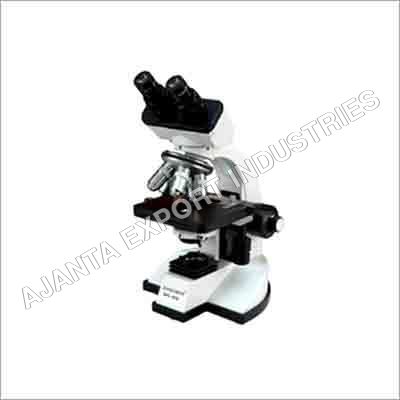
Biological Microscopes:-
Microscopes are fitted with our Parachromatic AT Type Objectives. These objectives are ideally designed for the critical requirements of Clinical, incorporating a unique centering & parfocalizing mechanism, giving the user the freedom to enhance the performance with due regard to specimen & microscope parameters. For maximum observer comfort, our newly designed HKW l0x oculars combine a wide field of view with a high eye point. Color correction and field flatness are outstanding and these along with our achromatic objectives complete the specially developed compensating system. All air-glass surfaces are Anti-Reflection Coated.
Robust Optical PerformanceThis microscope's finite optical system with achromatic objectives and wide-field eyepieces delivers sharp and clear images across a wide magnification range. An Abbe condenser with iris diaphragm ensures optimal light control and clarity, making it suitable for diverse biological and laboratory applications.
User-Centric Design for ComfortA 45 inclined view tube and smooth mechanical stage enhance user comfort. The binocular variant provides interpupillary distance adjustment (55-75mm) and diopter adjustment on the left eyepiece for personalized viewing, making extended observations easier and more precise.
Versatile & Reliable for LaboratoriesDurable metallic construction and anti-fungal optics ensure longevity and minimal maintenance. The double-layer mechanical stage with vernier scale, spring-loaded clips, and precise focus adjustments help users manipulate slides accurately, making this microscope ideal for regular laboratory use in educational, clinical, or research settings.
FAQ's of Biological Microscopes:
Q: How do I adjust the focus on this biological microscope for a clear image?
A: The microscope offers both coarse (25mm range) and fine (2mm range) focus adjustments via coaxial knobs. Begin with coarse adjustment to bring the specimen into general focus, then use the fine adjustment for sharp detail. Binocular models also provide diopter adjustment on the left eyepiece for precise individual eye focus.
Q: What types of samples can I observe using this microscope?
A: This microscope is designed for observing biological specimens such as cells, tissues, microorganisms, and prepared slides commonly found in laboratories. Its achromatic objectives and wide magnification range (40x-1600x) make it suitable for educational, clinical, and research use.
Q: When should I use the oil immersion objective lens?
A: Use the 100x oil immersion objective lens when you require the highest magnification and detailed resolution, typically for observing bacteria or fine cell structures. Remember to apply immersion oil between the lens and slide and clean thoroughly after each use to maintain image quality.
Q: Where can I connect a camera for digital imaging or capture?
A: A compatible camera can be attached via the optional camera port, available on models outfitted for digital imaging. This setup enables you to capture still images or video of the observed specimens for documentation or analysis.
Q: What is the process for replacing the light source or spare parts?
A: To replace the halogen or LED lamp, switch off and unplug the microscope, access the lamp housing, and replace with a compatible bulb supplied as a spare. Other parts such as fuses, dust covers, or immersion oil can also be replaced as needed, ensuring the microscope remains operational with minimal downtime.
Q: How does the mechanical stage support precise sample movement during observation?
A: The double-layer mechanical stage allows precise movement of slides with X-axis (75mm) and Y-axis (35mm) controls, along with smooth vernier scale adjustments and spring-loaded clips. This enables accurate positioning for thorough examination of various specimen areas.
Q: What are the benefits of the anti-fungal optics and robust metal construction?
A: The anti-fungal optics safeguard internal lenses against fungal growth, maintaining optical clarity and extending the lifespan of the instrument. The sturdy metal frame ensures stability, durability, and reliable performance, even in demanding laboratory environments.







 English
 Spanish
 French
 German
 Italian
 Chinese (Simplified)
 Japanese
 Korean
 Arabic
 Portuguese






 Send Inquiry

