Product Description
Tunning Forks
Description:
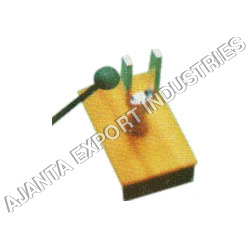
We are one of the leading manufacturers and suppliers of Tuning Forks, which is a used to to produce vibrating sound. A Tuning Fork comprises of a U-shaped prong of the elastic metal(like steel). When prong of a tuning fork is hit by a solid objects like hammers, it produces a vibrating sound. These vibrators are used mainly in Musical Instruments.
Specifications:
Superior Craftsmanship and PrecisionOur tuning forks undergo a rigorous manufacturing process that ensures each instrument delivers accurate frequencies. Made from quality steel or aluminum and offered in nickel-plated or uncoated finishes, they maintain their performance and integrity through repeated use. The polished or mirror finish provides not only aesthetic appeal but also prevents corrosion.
Versatile Applications in Numerous FieldsThese tuning forks are widely used in hospitals, laboratories, educational institutions, and for acoustic experiments. Their precise frequency tuning and sturdy U-shaped design make them reliable tools for diverse diagnostic and educational needs. Each fork is available in a range of dimensions tailored to frequency, accommodating various scientific and diagnostic purposes.
FAQ's of Tunning Forks:
Q: How do I select the right frequency tuning fork for my application?
A: Choose the tuning fork frequency based on your intended use-lower frequencies (e.g., 128 Hz) are common in medical diagnostics, while higher frequencies (up to 4096 Hz) are favored in physics, laboratory, and acoustic testing. Custom frequencies are also available to meet specific requirements.
Q: What benefits does the polished or mirror finish provide?
A: A polished or mirror finish not only enhances the appearance of the tuning fork but also helps in corrosion resistance and easy cleaning, maintaining the fork's durability and precision over time.
Q: When should I use a nickel-plated versus an uncoated tuning fork?
A: Nickel-plated forks are best in environments needing extra corrosion resistance, such as medical or humid settings. Uncoated forks are preferred where direct metal contact is essential for specific experimental requirements.
Q: Where are these tuning forks typically used?
A: These tuning forks are commonly used in hospitals, research laboratories, educational institutions, and acoustic testing facilities across various sectors, including medical diagnostics and physics education.
Q: What is the process for marking the frequency on each fork?
A: Each tuning fork is permanently stamped with its precise frequency value during production, enabling easy identification and ensuring accuracy is maintained throughout its lifespan.
Q: How should tuning forks be stored or transported?
A: To protect your tuning forks from damage, each is individually packed in a PVC sleeve or box. This careful packaging helps prevent scratches, maintains finish quality, and ensures accurate sound output when needed.
Q: What are the main benefits of using these tuning forks in laboratory or educational settings?
A: Their precise tuning, durable construction, and clear marking make them reliable for repeatable experiments and teaching demonstrations. The robust design and temperature resistance up to 80C offer added versatility in various environments.







 English
 Spanish
 French
 German
 Italian
 Chinese (Simplified)
 Japanese
 Korean
 Arabic
 Portuguese




 Send Inquiry

