Product Description
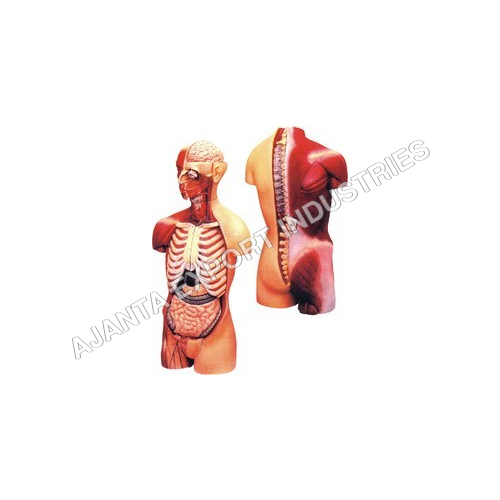
Life size, 17 parts, half on brain, eye with muscles and optic nerve, 2 - lung halves, heart in 2 parts, bronchial tree, liver, stomach, small and large intestines, appendix flap, kidney half, bladder with pelvic floor and first lumbar vertebra. Part of neck and back are opened to show vertebral column, spinal coral and it's meninges and nerves. Mounted on base. Numbered with English Key Card Robust Construction and Detailed AnatomyConstructed from high-quality PVC, this torso model is engineered for durability while maintaining accurate anatomical detail. The open-back design offers an unobstructed view of internal musculature, making it indispensable for instruction and demonstration in medical labs and hospitals. Its size and weight allow for easy handling and repositioning during classes or medical training.
Practical Application in Medical EducationDesigned specifically for the educational sector, this anatomical torso aids in the hands-on learning and teaching of human muscular and internal structures. It serves as a reliable training tool for medical students, healthcare professionals, and educators, ensuring comprehensive understanding of human anatomy in a controlled, safe environment.
FAQ's of Torso With Muscles And Open Back:
Q: How is the Torso With Muscles And Open Back used in medical laboratories and hospitals?
A: This anatomical model is primarily utilized for teaching anatomy to medical students, facilitating demonstration of muscle groups and internal organs. Its open back offers clear visibility for detailed study, making it instrumental during practical sessions or patient education in academic and clinical settings.
Q: What is the material of the torso model, and why is it suitable for educational use?
A: The model is crafted from PVC, a material known for its sturdiness and ability to replicate anatomical structures accurately. PVC ensures the torso withstands frequent handling while providing a realistic surface for educational demonstrations in laboratories and hospitals.
Q: When is it beneficial to use this anatomical torso model?
A: This model proves especially valuable during anatomy training, demonstrations, and practical examinations. It is ideally used at the beginning of medical or nursing courses, during anatomy workshops, or when introducing new staff to human anatomical structures.
Q: Where can this torso model be placed or displayed for optimum use?
A: With dimensions of 558.8 millimeters in height and 39 centimeters in width, the model is well-suited for placement on desks, lab benches, or teaching podiums within medical laboratories and hospital training rooms, ensuring accessibility and visibility for students and professionals.
Q: What is the process of cleaning and maintaining the PVC anatomical torso?
A: The torso should be cleaned using a soft, damp cloth with mild soap. Avoid harsh chemicals to preserve the integrity of the PVC. Proper maintenance includes regular dusting and careful handling to prevent any damage to detachable parts or painted anatomical features.
Q: How does using this model benefit medical training and patient education?
A: Utilizing this anatomical torso enhances visual and tactile learning, enabling a better grasp of muscle structures and internal anatomy. It fosters interactive teaching, improves knowledge retention among students, and aids healthcare professionals in explaining medical conditions to patients.







 English
 Spanish
 French
 German
 Italian
 Chinese (Simplified)
 Japanese
 Korean
 Arabic
 Portuguese




 Send Inquiry

