Product Description
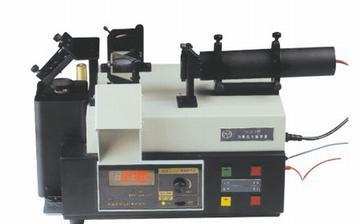
THERMAL EXPANSION EXPERIMENT DEVICE
Description:
Determination of thermal expansion coefficient by optical Interference techniques The Michelson Interference path in this instrument causes change in interference fringes because of the change of the tested sample, thereby determining the variance of the sample length, and further, the linear expansion coefficient.
Details:
| He-Ne Laser | 632.8nm, 1.0mW |
| Sample Type | Copper, steel, Aluminum |
| Sample Length | 150mm |
| Heating Range | 20-60oC,temperature control |
| Temperature Measurement Accuracy | 0.1oC |
| Display Value Error | ±1% |
| Power Consumption | 50W |
| Error of Linear Expansion Coefficient | <3% |
Advanced Demonstration of Linear ExpansionThis equipment enables precise measurement and visualization of linear thermal expansion in metals using an analog dial gauge with 0.01 mm accuracy. Supplied rods of brass, copper, and iron facilitate comparative studies, making it perfect for in-depth demonstrations in physics labs.
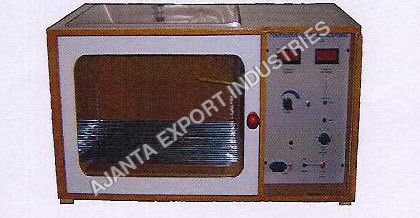
Secure and Uniform Heating for Consistent ResultsThe integrated 50W electric heater with manual On/Off control and a dedicated water bath ensures rods are heated consistently and safely up to 200C. Locking screw clamps hold rods firmly, while heat-resistant knobs protect users during operation.
Durable Construction for Long-Term UseManufactured from powder-coated stainless steel with a stable base, the device is built for repeated classroom use. Its provided aluminium rods and interchangeable components offer flexibility and longevity, supporting rigorous laboratory requirements.
FAQ's of THERMAL EXPANSION EXPERIMENT DEVICE:
Q: How does the Thermal Expansion Experiment Device operate in a laboratory setting?
A: The device utilizes an integrated electric heater to heat interchangeable metallic rods, typically while submerged in a water bath to ensure uniform temperature distribution. As the rod expands linearly with heat, the analog dial gauge measures the expansion with 0.01 mm accuracy, enabling precise observation for learners.
Q: What types of expansion rods are included with the device for demonstrations?
A: The device comes with three types of rods: brass, copper, and iron, each approximately 400 mm in length. These rods allow users to compare the thermal expansion properties of different metals during experiments.
Q: When should the water bath provision be used during an experiment?
A: The water bath is recommended when uniform heating of the rod is required, as it helps distribute heat evenly along the length, reducing the risk of hotspots and enabling more accurate measurements of linear expansion.
Q: Where is this equipment most commonly utilized?
A: This thermal expansion measurement device is most often used in physics laboratories within educational institutions, research settings, and technical training centers throughout India and beyond, where hands-on demonstration of thermal expansion is essential.
Q: What are the main safety features of the device during operation?
A: Safety is ensured through the use of heat-resistant handling knobs for manipulating rods and the frame. The locking screw clamps secure the rods in place, while durable construction prevents accidents during repeated use at elevated temperatures.
Q: What are the primary benefits of using this thermal expansion device in teaching?
A: The main benefits include immediate, visible results for students, high precision in measurements, demonstration versatility with multiple metals, robust construction for classroom durability, and enhanced understanding of materials' thermal properties.







 English
 Spanish
 French
 German
 Italian
 Chinese (Simplified)
 Japanese
 Korean
 Arabic
 Portuguese


 Send Inquiry

