Product Description
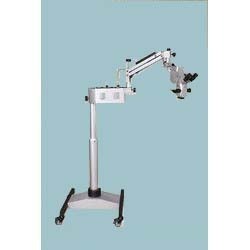
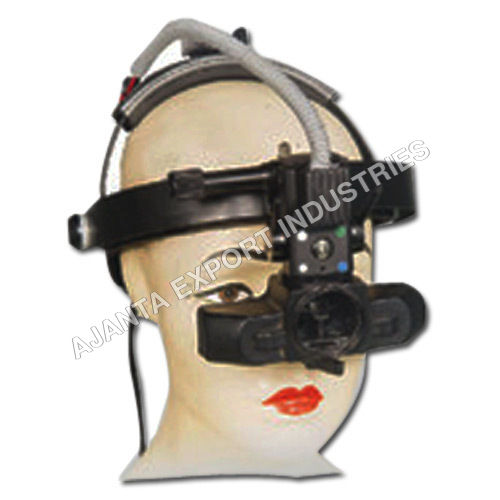
Surgical Ophthalmic Microscope
AJANTA EXPORT INDUSTRIES are manufacturer, supplier and Exporter of Surgical Ophthalmic MicroscopeFeatures:
High accuracy
User friendly
Technologically advanced
Technical specifications:
Microscope section:
Innovative designed, highly versatile with latest 45° inclined optical system
15x wide field eye pieces
3 Step magnification ( 5x, 10x & 20x) or
5 Step magnification (0. 4x, 0. 63x, 1x, 1. 6x & 2. 5x) or
Continuous zoom (5x ~ 25x)
Beam splitter with mount
CCD digital camera
Working distance: f= 200mm objective lens
Inter pupillary distance adjustment: 55mm to 75mm
Focusing manual or motorized with foot control
LCD monitor/screen: mount on microscope to display live surgery
Illumination section:
Light source: 15v-150w / 24v-250w twin halogen reflector lamp
Illumination control: continuous adjustment
Co-axial through-the-lens fiber optic light guide, white bright light
Field of illumination: 70mm
Filter: cobalt blue, red-free, heat absorbing filter
Stand section:
Type: mobile floor stand on four caster wheel for easier handling and absolute stability
Vertical height adjustment range of counter balanced panto graphic arm: 300 to 560mm
Rotation of arm : 320 with lock
General information:
Base size : 600mm x 550mm
Weight : 65 kgs. Approx.
Height : 1550mm
Electrical power : AC 220V, 240V, 50/60hz or 110 V on request
Power consumption : 220va or 110 V
Optional accessories:
Advanced Laser Technology for Enhanced VisionUtilizing state-of-the-art laser technology, the surgical ophthalmic microscope offers unparalleled precision during eye surgeries. This technology equips surgeons to perform intricate procedures with refined focus and accuracy, enhancing outcomes and minimizing risks. The integration of laser guidance supports a variety of ophthalmic applications, making this microscope a reliable asset.
Robust and Ergonomic DesignCrafted from high-quality stainless steel, the microscope boasts a sturdy construction with a weight range of 10 to 50 kilograms, ensuring exceptional stability even during long procedures. Its manual-driven method allows for precise adjustments, tailoring the instrument to various surgical requirements, and promoting ergonomic efficiency for hospital staff.
FAQ's of Surgical Ophthalmic Microscope:
Q: How is the surgical ophthalmic microscope powered and adjusted during operations?
A: The microscope operates on a voltage of 220-240V and uses a manual-driven method, allowing surgeons to make precise adjustments during surgical procedures. This ensures optimal visualization tailored to the specific needs of each patient.
Q: What are the key benefits of using this microscope in ophthalmic surgeries?
A: This microscope provides surgeons with enhanced precision owing to its advanced laser technology, stable stainless steel construction, and adjustable features, leading to improved surgical outcomes and higher safety for patients.
Q: When should a hospital consider upgrading to this surgical ophthalmic microscope?
A: Hospitals undergoing an increase in complex eye surgeries or seeking to adopt newer technologies for better patient care should consider upgrading to this microscope. Its features are particularly beneficial in facilities aiming to stay at the forefront of ophthalmic care.
Q: Where can this microscope be purchased or sourced in India?
A: The surgical ophthalmic microscope is available through authorized distributors, exporters, manufacturers, suppliers, and traders across India. Hospitals and clinics can source it directly from these channels for prompt delivery and technical support.
Q: What is the process for installing and setting up the microscope in the hospital?
A: Installation typically involves delivery by the supplier, followed by onsite assembly of the stainless steel components and initial calibration. Trained technicians will ensure the manual adjustments and laser functions are set up correctly for immediate operational use.
Q: How is the microscope typically used during hospital procedures?
A: It is used during ophthalmic surgeries to provide high-magnification, clear visualization of the surgical area. Surgeons manually adjust the microscope for positioning and focusing, while benefiting from the stability and clarity provided by its design and laser technology.







 English
 Spanish
 French
 German
 Italian
 Chinese (Simplified)
 Japanese
 Korean
 Arabic
 Portuguese


 Send Inquiry

