Product Description
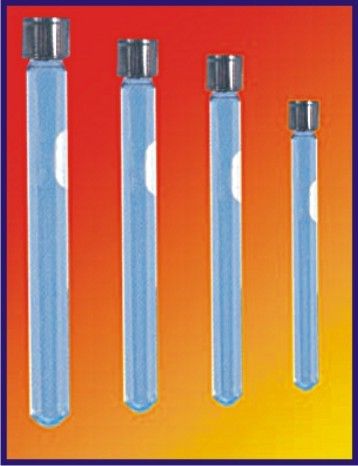
| Specimen tubes transparent with poly screw cap. |
| | Height | Diameter |
| BIO-1112.1 | 50 | 25mm |
| BIO-1112.2 | 75 | 25mm |
| BIO-1112.3 | 100 | 25mm |
| BIO-1112.4 | 75 | 32mm |
| BIO-1112.5 | 100 | 32mm |
| BIO-1112.6 | 75 | 37mm |
| BIO-1112.7 | 100 | 37mm |
Accurate Measurement and Leak-Proof SecurityEach tube offers distinctly printed graduation markings for precise measurement of samples. Color-coded snap, screw, or push caps provide a tight, secure seal, protecting samples from leaks and contamination. This design ensures safe handling during transport or storage in any laboratory setting.
Versatile, Chemically Resistant MaterialsConstructed from glass, polypropylene, or polystyrene, these specimen tubes withstand exposure to a wide range of chemicals, solvents, and biological fluids. The autoclavable polypropylene versions further enhance sterility, making them suitable for repeated usage in demanding laboratory protocols.
Easy Handling and Compliance GuaranteedTransparent bodies allow quick visual inspection, and the smooth, low-retention inner surface minimizes sample adherence to the tube walls. Conforming to ISO and CE standards, these tubes meet global requirements for safety and performance, ensuring trustworthy results for every laboratory professional.
FAQ's of Specimen Tubes:
Q: How should specimen tubes be sterilized for reuse?
A: Specimen tubes made from polypropylene can be autoclaved at temperatures up to 121C to ensure sterility. Always check if the specific tube is labeled as autoclavable and follow your facility's sterilization protocols for safe and effective reuse.
Q: What types of caps are available, and how do they prevent leakage?
A: These tubes are offered with snap, screw, or push caps, all designed to provide a leak-proof seal. This secure closure prevents contamination and spillage, making them reliable for transporting and storing samples.
Q: When are sterile versus non-sterile tubes recommended?
A: Sterile tubes are best for applications requiring contamination-free conditions, such as clinical diagnostics or molecular biology. Non-sterile tubes are suitable for general sample collection or when sterilization will be performed prior to use.
Q: Where can these specimen tubes be used?
A: They are widely used in hospitals, research institutes, diagnostic centers, and industrial laboratories throughout India and can be integrated into sample collection, transport, and storage workflows.
Q: What are the benefits of the low-retention inner surface?
A: A smooth, low retention surface minimizes sample adherence, ensuring you recover the maximum amount of your specimen and obtain accurate test results. This is especially advantageous when working with precious or limited samples.
Q: What packaging options are offered for these specimen tubes?
A: You can choose between bulk packs for high-throughput use or individual sterile wraps for critical applications. This flexibility allows optimal storage and reduces the risk of contamination in sterile workflows.







 English
 Spanish
 French
 German
 Italian
 Chinese (Simplified)
 Japanese
 Korean
 Arabic
 Portuguese



 Send Inquiry

