Product Description
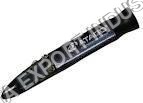
Features: The units can be used for controlling the concentration of saltwater used in rinsing seafood or salinity in cooking. NEW material (which is durable for salty and acid sample) is adopted. It is an Automatic Temperature Compensation (ATC) model with water resistant properties (IP65), Specifications:-Model:MASTER-S28a, C.No.: 2481Scale range:Sodium chloride 0.0 to 28.0%(Automatic Temperature Compensation)
Minimum Scale: Sodium chloride 0.2%, Measurement Accuracy: 0.2% (10 to 30C)
Optional: Daylight plate for small volume samplings for MASTER series : RE-2391-50M (Except viscosity sample), Calibration Certificate, Parts:Daylight plate for MASTER series : RE-2391-59M, International Protection Class :IP65 (except eye piece) Dust-tight and Protected against water jets. Size & Weight: 3.23.420.3cm, 105g
Precision Salinity MeasurementExperience accurate and consistent measurements with the Salinity Refractometer Range 28. Boasting a 1.0% accuracy and a wide measurement range up to 28% salinity, this tool is particularly valuable for quality control, research, and laboratory testing of saline solutions. Its analog display provides quick and clear readings to help users monitor and adjust salinity levels precisely.
User-Friendly Operation and CalibrationDesigned for manual, power-free operation, this refractometer is simple to use. The adjustable focus eyepiece and manual control type make it easy for users of all experience levels. Calibration can be performed easily using distilled water, ensuring that you always achieve accurate results with minimal effort.
Built for Portability and DurabilityConstructed from an aluminum body with plastic components and an optical glass prism, this 27 x 4 x 4 cm refractometer is lightweight and durable. Its compact size and included carry case enable convenient transport and storage, making it suitable for laboratory environments and fieldwork alike.
FAQ's of Salinity Refractometer Range 28:
Q: How do I calibrate the Salinity Refractometer Range 28?
A: To calibrate this refractometer, place a few drops of distilled water on the main prism, close the cover, and look through the eyepiece. Adjust the calibration screw until the boundary line aligns with the zero mark. Calibration should be done at the reference temperature of 20C for optimal accuracy.
Q: What is the process for measuring salinity using this refractometer?
A: Add a few drops of the liquid sample onto the prism, close the cover plate, and look through the eyepiece. The analog scale will display the salinity reading. Make sure the refractometer has been calibrated and is within its temperature resistance range (10C-30C) for accurate results.
Q: When should I use the Automatic Temperature Compensation (ATC) feature?
A: The ATC feature automatically corrects readings for temperature differences between 10C and 30C. This ensures consistent salinity measurements without the need for manual temperature adjustments, particularly useful when testing samples at varying ambient temperatures.
Q: Where can this refractometer be used effectively?
A: This instrument is designed for laboratory and field use, making it valuable in research institutions, educational labs, aquaculture, water quality control, and industrial environments requiring precise salinity measurements.
Q: What benefits does the lightweight, handheld design offer?
A: The lightweight and portable cylindrical structure, along with the provided carry case, allows for easy handling, storage, and transportation. It is ideal for on-the-go professionals who require reliable, convenient salinity measurement tools.
Q: What kind of maintenance does this refractometer require?
A: Clean the optical glass prism and eyepiece after each use with a soft, lint-free cloth. Avoid dropping or exposing the device to harsh chemicals. Regular calibration with distilled water ensures consistent performance and accuracy.






 English
 Spanish
 French
 German
 Italian
 Chinese (Simplified)
 Japanese
 Korean
 Arabic
 Portuguese


 Send Inquiry

