Product Description
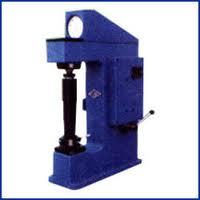
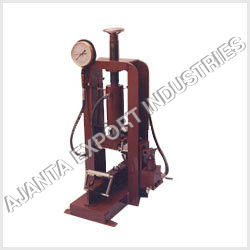
Rockwell Hardness Tester
SL-5 : Rockwell Hardness Tester Manual weight selection an Manual zero adjustment of Dial gauge
SL-5A : Rockwell Hardness Tester Manual weight selection with Automatic zero setting dial Gauge
SL-5B : Rockwell Hardness Tester Automatic weight selection with automatic zero setting dial gauge
SL- 5C: Rockwell Hardness Tester Arrangement similar to SL 5B with one additional weight of 187.5 kg for Brinell tests
SL- 5D: Rockwell Hardness Tester Arrangement similar to SL 5B with two additional weight of 187.5 kg and 250kg for Brinell tests on this machine small pin having dia 2mm can be tested as plunger is guided with a set of six bearings.
SL- 5E : Rockwell Superficial Hardness Tester with automatic zero setting dial gauge, manual load selection. The major load are N scale besides all fifteen Rockwell Superficial scales. Can be used with this tester
SL-5F : This model is double purpose Hardness Tester suitable for Both Rockwell & Rockwell Superficial hardness test. The Major load of 15,30, 45,60, 100 and 150 kg are applied.
Durable Construction for Laboratory ExcellenceBuilt from cast iron and finished with corrosion-resistant powder coating, this Rockwell Hardness Tester is engineered for longevity and durability. The robust material ensures optimal performance even with repeated laboratory use. Its stable structure, together with a reliable analog gauge, delivers consistently accurate hardness measurements, supporting long-term testing requirements.
Versatile Accessories for Comprehensive TestingThis tester includes essential standard accessories such as diamond and ball indenters, standard test blocks, a flat anvil, and a V anvil. These components enable a broad spectrum of hardness tests on different materials, extending the device's utility and accuracy. The comprehensive accessory set makes it suitable for various laboratory applications and testing protocols.
FAQ's of Rockwell Hardness Tester:
Q: How does the manual Rockwell Hardness Tester operate without electrical power?
A: The tester employs a manual lever mechanism to apply force, allowing users to perform hardness testing without any need for electrical power or batteries. The analog gauge displays results instantly, making it practical for laboratories where power sources may not be readily available.
Q: What materials can be tested using this Rockwell Hardness Tester?
A: The device is suitable for a wide range of materials, including mild steel, alloys, and other metals commonly tested in laboratories. The inclusion of both diamond and ball indenters, as well as standard test blocks, allows for accurate hardness measurements on samples with varying hardness levels.
Q: When is this Rockwell Hardness Tester most beneficial in a laboratory setting?
A: This tester is ideal for routine hardness measurements and quality control processes that require consistent and reliable reading. Its manual operation and robust design make it especially suitable for laboratories with high sample throughput and those seeking durable, low-maintenance equipment.
Q: Where should the Rockwell Hardness Tester be installed for optimal use?
A: It should be placed on a stable, level laboratory bench or table that can support its 65 kg weight. The base dimensions (350 x 220 mm) make it compact enough for most laboratory environments while ensuring stability during testing.
Q: What is the process for performing a hardness test using this machine?
A: To conduct a test, the appropriate indenter and test block should be selected and installed. The sample is placed on the anvil, the manual lever is used to apply force, and the analog gauge provides the hardness value. Standard accessories and the clear analog display ensure accurate and repeatable results.
Q: How does the throat depth of 150 mm enhance usability?
A: The throat depth allows users to test the hardness not only at the edge but also deeper within the sample, accommodating a wider variety of shapes and sizes. This versatility is particularly valuable for laboratory applications where test points may not always be near the exterior of the material.







 English
 Spanish
 French
 German
 Italian
 Chinese (Simplified)
 Japanese
 Korean
 Arabic
 Portuguese


 Send Inquiry

