Product Description
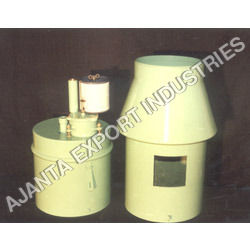
Rain Gauge Self Recording
Features:
High accuracy.
Elegantly designed.
Tropicalized
Specifications:
Reliable and Precise Rainfall DataThis rain gauge features a self-recording mechanical system that captures even the slightest rainfall changes with a 1 mm accuracy. Its cumulative analog chart display allows for detailed trend analysis, making it invaluable for meteorological and hydrological observation. The instrument's robust materials and weatherproof design ensure dependable performance year-round.
Sturdy Construction, Easy MaintenanceBuilt with a powder-coated mild steel stand and borosilicate glass components, the rain gauge resists corrosion and UV exposure. Its design permits straightforward cleaning and servicing, minimizing downtime. The mechanical clock needs winding only once every 7 days, enabling hassle-free, prolonged deployment in laboratories and the field.
FAQ's of Rain Gauge Self Recording:
Q: How does the self-recording rain gauge operate without electrical power?
A: The rain gauge uses a mechanical, spring-driven clockwork mechanism that rotates the recording chart. Rain collects in the borosilicate glass jar, and a syphon and float system activates an ink stylus to trace rainfall amounts onto the chart. No electrical supply is needed; simply wind the clock every 7 days.
Q: What are the advantages of using this rain gauge for meteorological or hydrological studies?
A: Its continuous, analog recording method offers precise cumulative rainfall data over extended durations. The 200 mm collector ensures standardized measurement, while the easy-to-replace 24-hour or 7-day charts make long-term monitoring and data analysis convenient. Its weatherproof, sturdy construction suits demanding environments.
Q: Where can this rain gauge be installed and used effectively?
A: It is ideal for laboratory use and outdoor installation in meteorological and hydrological stations, research centers, agricultural fields, and educational institutions. The tripod, corrosion-resistant stand allows stable placement on most surfaces, while the weatherproof enclosure enables reliable operation in varying climates across India and beyond.
Q: What is the maintenance process for this self-recording rain gauge?
A: Maintenance involves periodically emptying and cleaning the collector jar, checking and refilling the ink stylus, and replacing the chart paper as needed. The robust, powder-coated structure and quality glass parts are designed for simple, tool-free access, ensuring minimal upkeep.
Q: When should the recording chart or clock mechanism be attended to?
A: Typically, the spring-driven clock needs winding once every 7 days. Chart paper should be changed according to the desired recording cycle (every 24 hours or 7 days). Regular weekly maintenance keeps the device functioning optimally and preserves measurement accuracy.
Q: What are the benefits of the syphon and float mechanism used in this device?
A: The syphon and float arrangement delivers consistent, reliable transfer of rainfall to the chart recorder. This mechanical precision ensures accurate documentation without electronic calibration, making it dependable even in remote or power-limited locations.







 English
 Spanish
 French
 German
 Italian
 Chinese (Simplified)
 Japanese
 Korean
 Arabic
 Portuguese


 Send Inquiry

