Product Description
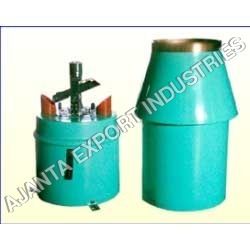
Description:The rain gauge uses a tipping bucket (cup) mechanism that triggers a magnetic reed switch once every unit of rainfall. Every pulses by Tipping bucket is counted by Digital Data logger having 256 KB Data Memory. The Data logging interval can be set according to requirement for site or weather condition in internal Memory. It can be set to 5/10/15/20/30/60/120 minutes. Which is sufficient for logging 110 days of data @ 10 minutes logging interval. The Data logger consist of Real Time Clock with extra Battery backup of Lithium Battery.The rain gauge series tipping bucket Rain Gauge is sturdy construct from durable Fibre glass body. The tipping mechanism is having very solid construction ensuring that tips are accurate and consistent in volume. The system consists of 12V SMF Battery for longer supply. Mains Battery Charger, Data Logger. The data can be uploaded through internal RS232 port to computer when needed. The external memory (optional) can be used to offload data from Data logger placed on field & later upload to PC located at office.The system can easily be taken apart to clean. Debris and dirt will collect in this mechanism, thus making it essential that cleaning be comes an integral part of the maintenance program.Specifications:
- Sensing Type: Tipping Bucket mechanism
- Resolution: 0.5 mm per tip
- Operating Range: Upto 600 mm/hr
- Realiability: Typically five (5) years' operation.
- Contact System: Reed Switch
- Data Logger: Micro controller based Digital Data Logger
- Memory: 128KB (Sufficient for 16384 readings: 110 days @ 10 minute Log Interval)
- Log Interval: 5/10/15/20/30/60/120 minutes
- Battery: 12V SMF Battery with Mains charger (Optional with Solar Battery Charger)
High-Precision Rainfall MonitoringUtilize the integrated tipping bucket sensor and microcontroller-based control to achieve accurate rainfall data logging with 0.2 mm precision or better. The system's real-time clock guarantees time-stamped records, making long-term weather data analysis reliable and straightforward.
Flexible Installation and User-Friendly InterfaceDesigned with adaptability in mind, the rain data logger can be easily mounted on walls or poles, making it suitable for various environments. Its digital LCD display ensures users can instantly access recordings and system status, while the programmable logging interval tailors data collection to your project needs.
Reliable Operation and Data AccessibilityWith an IP65-rated enclosure and a battery backup of up to 6 months, this logger stands up to challenging environments and power interruptions. Data transfer is seamless through USB or RS232 interfaces, and compatibility with CSV/Excel formats allows hassle-free reporting and analysis.
FAQ's of Rain Data Logger:
Q: How does the rain data logger record and store rainfall measurements?
A: The device uses a tipping bucket rain sensor, which records each tip equivalent to 0.2 mm of rainfall. These measurements are time-stamped and stored in its memory (up to 50,000 logs), allowing for detailed weather tracking and analysis.
Q: What is the process for retrieving logged data from the device?
A: Data can be retrieved using either the USB or RS232 interface. The downloaded files are compatible with standard CSV or Excel formats, enabling users to easily analyze, report, and share rainfall data.
Q: Where can the rain data logger be installed for optimal performance?
A: It is designed for flexibility and can be wall- or pole-mounted, making it suitable for laboratory settings, outdoor field stations, or any environment that requires reliable rainfall monitoring.
Q: What operating conditions can the logger withstand?
A: The logger operates reliably in humidity from 0% to 100% RH and temperatures ranging from -10C to 60C. Its IP65-rated enclosure protects it from dust and water ingress, making it weatherproof and ideal for varied climates.
Q: How does the user-programmable alarm system work?
A: Users can set threshold values for rainfall events. When these thresholds are reached, the logger activates an alarm, providing timely notifications for critical weather conditions or flooding risks.
Q: When should users recharge or replace the battery?
A: With a fully charged internal rechargeable battery, the logger can operate autonomously for up to 6 months. An external adapter or DC supply (12V DC) can also be used as needed.
Q: What are the primary benefits of using this automatic rain data logger?
A: Benefits include precise rain measurement, long-term data storage, weatherproof durability, programmable logging intervals, and seamless data access-all crucial for researchers, meteorologists, and environmental monitoring applications.







 English
 Spanish
 French
 German
 Italian
 Chinese (Simplified)
 Japanese
 Korean
 Arabic
 Portuguese


 Send Inquiry

