Product Description
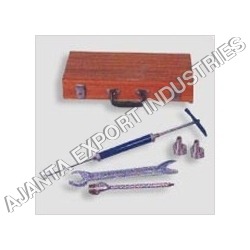
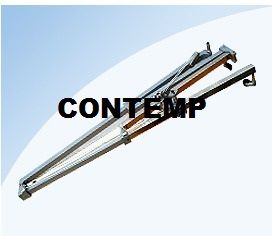
Proctor Penetrometer, Spring Type
We manufacture and export an extensive range of Proctor Penetrometer, Spring Type. These are developed at our advanced manufacturing unit using high grade raw material. Meeting the demands of construction industry, our products are used to measure the compaction control in the field. It works by determining the moisture content and maximum dry density in soil.
Unmatched Precision for Soil TestingDesigned for laboratory professionals, the Proctor Penetrometer, Spring Type, guarantees high reading accuracy through its calibrated analog display and sliding pointer. This instrument enables reliable assessment of soil compaction and penetration resistance in accordance with IS:2720 (Part-40) standards.
Durable and Ergonomic ConstructionEngineered with a corrosion-resistant finish and constructed from quality metal and wood, this penetrometer offers both longevity and comfortable handling. The ergonomic grip ensures stability and reduces operator fatigue during manual operations.
Efficient and Compliant OperationOperating the Proctor Penetrometer is straightforward-apply manual force and take readings instantly via the direct analogue indicator. Its graduated scale and maximum load pointer make soil testing efficient and compliant with industry regulations.
FAQ's of Proctor Penetrometer, Spring Type:
Q: How is the Proctor Penetrometer, Spring Type, operated in the laboratory?
A: The device operates manually: the user applies downward pressure on the ergonomically designed handle, and the 1/4 inch plunger penetrates the soil. The analog display and sliding pointer provide immediate, precise readings of compaction resistance.
Q: What benefits does the factory calibration offer for accuracy?
A: Factory calibration ensures that the Proctor Penetrometer provides consistent and reliable results, minimizing user error and aligning measurements with laboratory standards for soil analysis.
Q: When should the Proctor Penetrometer be used in soil analysis?
A: It is ideal for use during soil compaction tests or when measuring penetration resistance, typically in geotechnical studies, foundation investigations, and quality control of earthworks.
Q: Where is this penetrometer commonly used?
A: Primarily used in laboratory environments, the Proctor Penetrometer can be found in educational institutes, research centers, and construction quality control labs across India.
Q: What process does the Proctor Penetrometer, Spring Type, follow to determine soil properties?
A: The instrument is pressed into soil samples, and as the plunger penetrates, the resistance is indicated on the analog scale. The sliding pointer locks at the maximum value, aiding in the assessment of soil compaction and suitability.
Q: How does the corrosion-resistant coating benefit the device?
A: The anti-corrosive finish extends the lifespan of the Proctor Penetrometer by protecting it from moisture and chemical exposure commonly encountered in laboratory settings.







 English
 Spanish
 French
 German
 Italian
 Chinese (Simplified)
 Japanese
 Korean
 Arabic
 Portuguese


 Send Inquiry

