Product Description
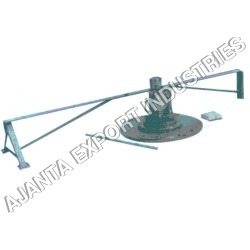
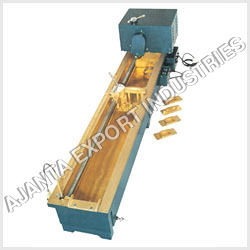
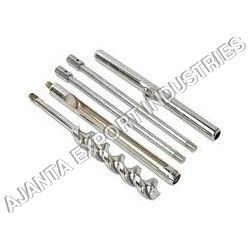
Our organization holds specialization in offering a qualitative range of Plate Bearing Tests. Manufactured using genuine quality raw material and modernized machinery, our entire range of products are widely demanded by our clients. All the products offered by us are designed in compliance with international quality standards. To meet the diverse needs of our valuable clients, we thoroughly test our products before final delivery.
Features:
Robustness
Dimensionally accurate
Optimum performance
Sturdy designing
Other information:
Comprehensive Soil Assessment for InfrastructureThe Plate Bearing Test is essential in evaluating the bearing capacity and settlement of soil under projected loads, particularly in infrastructure development. With plates ranging up to 750 mm and depths to 1 meter, this test provides accurate data for designing durable highways, railways, and airport pavements, ensuring long-term stability and safety.
Reliable Equipment and Result OutputQuality test outcomes are ensured with calibrated accessories like load cells, hydraulic jacks, and datum bars, all crafted in stainless steel for durability. The manual operation and flexible data acquisition methods enable both field and laboratory use, presenting a precise Load vs Settlement Curve that aids engineers in making informed design decisions.
FAQ's of Plate Bearing Tests:
Q: How is a Plate Bearing Test conducted in the field?
A: The Plate Bearing Test involves positioning a stainless steel plate (appropriate size) on a leveled and cleaned surface, applying incremental loads through a hydraulic or mechanical jack, and recording the resulting settlements using a dial gauge or electronic system. The process measures compressive strength and settlement, deriving a Load vs Settlement Curve.
Q: What types of plate sizes are available and how are they selected?
A: The test offers plate sizes of 300 mm, 450 mm, 600 mm, and 750 mm in diameter. The choice depends on the nature of the project and the bearing area required, with larger plates often used for larger load applications or to simulate broader foundation areas.
Q: When should a Plate Bearing Test be performed?
A: This test is recommended before commencing construction of highways, railways, airports, or structural foundations. It provides vital data during soil investigation and quality assurance phases to ensure the groundwork will support expected loads.
Q: Where can the Plate Bearing Test be utilized?
A: It is applicable across a variety of infrastructural projects, especially in highways, railways, airport runways, and foundation sites. The test can be conducted on-site or in laboratory settings, depending on project requirements.
Q: What is the standard process for preparing the test surface?
A: The area where the plate will be placed must be carefully leveled and cleaned to eliminate irregularities or weak materials. Proper surface preparation ensures accurate load transmission and reliable test results.
Q: What benefits does manual or electronic data acquisition offer?
A: Both manual and electronic data acquisition systems ensure flexibility and precision. Manual methods are straightforward and cost-effective, while electronic systems enhance recording accuracy and enable easier data management, suited for both field and laboratory environments.
Q: How does the Plate Bearing Test contribute to project safety and performance?
A: By providing an accurate assessment of soil compressive strength and settlement characteristics, the Plate Bearing Test helps engineers design foundations and pavements that minimize differential settlement, enhancing the durability, safety, and longevity of infrastructural assets.







 English
 Spanish
 French
 German
 Italian
 Chinese (Simplified)
 Japanese
 Korean
 Arabic
 Portuguese


 Send Inquiry

