Product Description
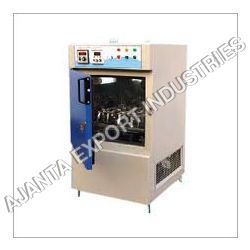
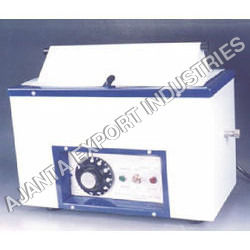
Designed for the growth of biological cultures and the shaking of chemical solutions Bench top controlled temperature incubator with precise dynamically balanced shaking apparatus Triple eccentric drive mechanism ensure reproducible , smooth rotating motion in 1 orbit Heavy duty , double walled incubation chamber with exterior epoxy powder coated finis hand fully gasketed lid in regular model Inner 316L S.S & exterior 304 S.S matt finish in GMP MODEL Solid state electronic temperature controller with digital indicator with digital RPM indicator Viewing window on lid and illumination light allows sample viewing without disturbing the environment Selection of above ambient model and cooling model. Speed range: 50 to 200 RPM- with 25mm orbit. Interchangeable shaking platform optional
Advanced Shaking and Incubation ControlEngineered for reliable laboratory performance, this orbital shaking incubator ensures precise temperature regulation with 0.5C accuracy and programmable timing up to 99 hours. The universal shaking platform allows for varied flask configurations, supporting a wide range of laboratory protocols. Its microprocessor-driven controller and clear LED display enable easy monitoring and parameter adjustments, ensuring consistency and reproducibility in every experiment.
Uncompromised Safety and Quiet OperationDesigned with user safety in mind, this incubator features over-temperature protection, auto cutoff for overheating, a safety thermostat, and a secure door interlock. The toughened glass door allows safe viewing during operation, reducing contamination risk. Its low noise level (<60 dB) makes it suitable for shared laboratory spaces, supporting a focused working environment while meeting stringent safety and quality standards.
FAQ's of Orbital Shaking Incubator:
Q: How does the orbital shaking incubator maintain uniform incubation conditions across the tray?
A: The incubator utilizes a microprocessor-controlled system with a universal platform that ensures even distribution of temperature and shaking speed across the 420 mm x 420 mm tray. The uniform air circulation and adjustable shaking (20-250 RPM) help maintain consistent conditions for all samples placed inside.
Q: What safety features are included to protect users and samples?
A: This model comes equipped with multiple safety features such as over-temperature protection, a safety thermostat, an auto cutoff for overheating, and a door interlock system. These mechanisms safeguard both users and samples from accidental exposure and equipment failure.
Q: When should the programmable timer and alarm be used?
A: The programmable timer, which can be set from 0 to 99 hours, is ideal for experiments requiring precise incubation or shaking durations. Once the set time elapses, an audible alarm notifies the user, making it suitable for time-sensitive laboratory protocols.
Q: Where is this shaking incubator ideally used?
A: This equipment is best suited for laboratory environments, including research institutes, universities, pharmaceutical labs, and biotechnology facilities. It supports cell cultures, enzyme reactions, shaking applications, and other incubation needs.
Q: What steps are involved in cleaning and maintaining the unit?
A: Routine maintenance involves wiping the stainless steel interior and the toughened glass panel with a mild disinfectant after each use. Ensure the unit is unplugged before cleaning and avoid using abrasive materials on the LED display or control panel. Regular checks on the platform and flask holders are recommended.
Q: What benefits does the universal platform with flask holders provide for laboratory workflows?
A: The universal platform is versatile, allowing the accommodation of various flask sizes with different holder configurations. This flexibility streamlines workflows by enabling simultaneous processing of multiple samples or experimental types within a single run, saving time and laboratory space.
Q: How does optional humidity control enhance incubation processes?
A: Optional humidity control minimizes sample dehydration and supports sensitive cell culture and microbiological applications. This feature allows users to tailor the environment for experiments that demand stringent atmospheric conditions, improving reproducibility and outcomes.







 English
 Spanish
 French
 German
 Italian
 Chinese (Simplified)
 Japanese
 Korean
 Arabic
 Portuguese


 Send Inquiry

