Product Description
Optical Lab Instruments
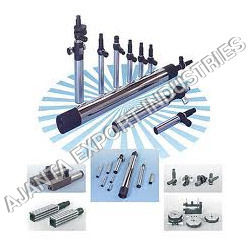
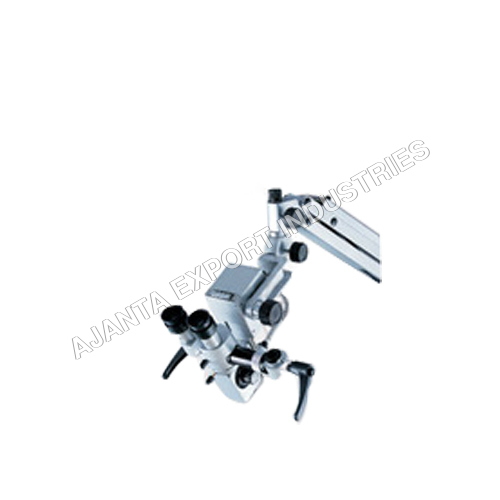
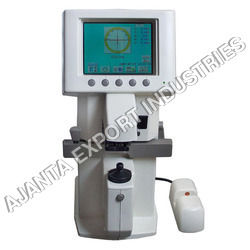
When it comes to high quality Optical Lab Instruments, Nessler Exports is counted as one of the trusted sources. We provide Optical Instruments which are of high quality and used in many industries. We provide the best quality, competitive price and timely delivery. These optical instruments are manufactured using top grade raw materials and have been designed and constructed in such a manner that can easily be used and understood by all the students and trainees.
Features:
- Accurately measuring the low-degree lens below +-0.12D
- Measuring the colored lens with 10% transmittance
- Displaying the PH value in screen
- Measuring the progressive lens accurately and quickly
- Optionally installing PD measuring instrument, UV measuring instrument and thermal printer
- User friendly interface with easy operation; fast measurement, high accuracy and good repetit
- Specifications:
| Sphere | Range-19.00+16.75m-1 Step 0.25m-1 3.00m-1 |
| Cylinder | Range 0.00-6.00m- 1(Measuring Range With Accessories 0.00-8.00m-1)
Step 0.25m-1 |
| Cylinder Axial | Range 0 180 Step 5 |
| Cross Cylinder | .25m-1 |
| Rotating Prism | Range 0 20 Step 1 |
| Auxiliary Lens | O Open aperture |
| R Retinoscope lens Lens of +1.50m-1 It is suit for the distance of 67 centimeters |
| RMV Red Vertical maddox Be used to examine Implicit strabismus |
| RMH Red horizontal maddox Be used to examine Implicit strabismus |
| P Polaroid it is used for examining the dioptric balance of eyes , Implicit strabismus and stereo vision |
| distance of Optical center (also known as Pupil) | Range 50 75mm Step 1mm |
| Sight Switch | Ran ge 380mm distance of Optical center is 64mm |
| Front Chin Rest | Range 0 16mm |
| Distance (from cornea vertex to the lens surface) | 16mm |
| Standard Accessories Lens | Two pieces of Auxiliary Cylinder -2.00m-1 and -0.12m-1 respectively |
| Standard Accessories | one piece of M2 Hexagon wrench , one piece of a Myopia Standard Card, two piece of Myopia Standard Card , one piece of standard card holder , a dust cover |
| Size | 338(L)99(W)292(H)mm |
| NW | About 5kg |
Precision Engineering with Laser TechnologyThese optical lab instruments employ advanced laser technology, providing surgeons with exceptional precision for delicate hospital procedures. Each instrument is meticulously engineered from stainless steel for durability, enhancing surgical outcomes while ensuring patient safety. Laser integration allows for high accuracy in optical interventions.
Manual Operation for Greater ControlThe manual-driven method of our surgical instruments gives practitioners tactile control during operations. This method is preferred for procedures that require real-time adjustments and immediate response, offering enhanced maneuverability and confidence in the operating room.
Trusted Partner for Hospitals Across IndiaAs a distributor, exporter, manufacturer, supplier, and trader, we support hospitals throughout India. Our strong logistics and expertise allow us to deliver reliable optical instruments, backed by comprehensive customer support and adherence to regulatory standards.
FAQ's of Optical Lab Instruments:
Q: How are optical lab instruments with manual-driven methods used in hospitals?
A: Manual-driven optical lab instruments are typically operated by skilled surgeons during procedures that require real-time adjustments and dexterity. The manual method enhances control over the surgical process, which is crucial for the precision required in ophthalmic and other optical surgeries.
Q: What advantages does laser technology provide in these surgical instruments?
A: Laser technology in these instruments allows for highly accurate cuts and minimal tissue damage. It provides smoother outcomes, reduces risk of infection, and supports faster patient recovery compared to traditional surgical tools.
Q: When is it appropriate to use these stainless steel optical lab instruments in a hospital setting?
A: These instruments are suitable for advanced surgical procedures involving delicate optical tasks, typically in hospital operating rooms. They are particularly valuable when precision and real-time manual control are required during eye or micro-surgical operations.
Q: Where do you deliver your optical lab instruments in India?
A: We distribute, export, and supply our optical lab instruments to hospitals, clinics, and medical institutions across India. Our extensive network ensures prompt and reliable deliveries regardless of location.
Q: What is the process for ordering and receiving these instruments?
A: Institutions can contact us directly to discuss their requirements. After order confirmation, the instruments are manufactured, quality-checked, and shipped securely via our trusted distribution channels. We also offer pre- and post-sales support.
Q: How does manual operation benefit surgeons during procedures?
A: Manual operation offers surgeons immediate tactile feedback and the ability to make precise adjustments. This control can be critical for complex surgeries, providing confidence and improving patient outcomes.
Q: What are the primary usage benefits of stainless steel in these surgical instruments?
A: Stainless steel ensures durability, corrosion resistance, and easy sterilization. This material maintains the integrity of the instruments through repeated use, making them reliable and cost-effective for hospitals.







 English
 Spanish
 French
 German
 Italian
 Chinese (Simplified)
 Japanese
 Korean
 Arabic
 Portuguese


 Send Inquiry

