Product Description
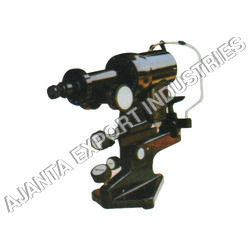
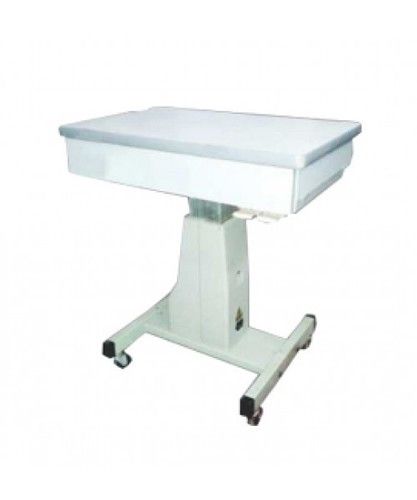
Ophthalmometer Instrument
Our business group is one of the prominent Ophthalmometer Instrument manufacturer and supplier. Manufactured using quality basic material, these ensures longer service life and reliable performance. Astigmatism is a condition of the eye in which the cornea or lens is misshapen and can result in vision problems.
Specification:
| Measuring range | Dioptres from 30,00 to 60,00 D - radius from 5,6 to 11,3 mm |
| Resolution | Dioptres 0,25 D - radius 0,05 mm |
| Useful measuring diameter | 3,4 mm equal to 9 square mm |
| Rating scale | Table & International |
| Lines of sight | According to Javal |
| Instrument base | Cross-wise movement to be stopped |
| Chin rest | Adjustable height with shutter device |
| Feeding voltage | 120 Vac /60 Hz - 230 Vac/50 Hz |
| Instrument voltage | 6 VaC |
| Bulbs of the lines of sight | 6 V - 10 W - SV 8,5 - 8 |
| Bulb of the illuminating rating scale | 6 V - 3 W - E 10 |
| Fuses | 5x20 mm 120 V - 250 mAT230 V - 125 mAT |
| Absorbing power (VA) | 24 VA |
Advanced Laser Technology for PrecisionUtilizing laser technology, this ophthalmometer provides highly accurate corneal measurements. Its manual operation ensures fine control during assessments, making it a trusted tool for ophthalmologists seeking precise diagnostic data.
Durable Stainless Steel ConstructionBuilt with high-grade stainless steel, the ophthalmometer offers exceptional durability, easy maintenance, and longevity. This robust construction ensures consistent performance even under frequent hospital usage.
Designed for Clinical ExcellenceWith an optimal weight range of 5-20 kg and user-friendly features, the instrument is well-suited for hospital settings. Reliable sourcing in India guarantees quality, comprehensive support, and timely supply to meet clinical demands.
FAQ's of Ophthalmometer Instrument:
Q: How does the laser technology in this manual ophthalmometer improve measurement accuracy?
A: The laser technology integrated in the manual ophthalmometer enhances accuracy by providing precise alignment and clear visibility during corneal curvature assessments. This results in consistent, reliable measurements essential for eye examinations.
Q: What is the typical process for using the Ophthalmometer Instrument in a hospital setting?
A: The process involves positioning the patient's eye before the instrument, manually aligning the device, and utilizing the laser to capture accurate corneal curvature data. Results are then used for diagnostic evaluation or surgery planning.
Q: When is it recommended to use a manual ophthalmometer instrument?
A: Manual ophthalmometers are recommended during routine eye exams, pre-operative evaluations for refractive surgeries, and when precise corneal measurements are required in hospital or clinical settings.
Q: Where can this ophthalmometer instrument be sourced from in India?
A: This instrument can be obtained from a range of distributors, exporters, manufacturers, suppliers, and traders throughout India who specialize in medical and hospital equipment.
Q: What are the primary benefits of using a stainless steel manual ophthalmometer in clinical practice?
A: The stainless steel build ensures longevity, corrosion resistance, and ease of cleaning. Manual operation provides control, while laser technology offers high measurement precision, altogether supporting reliable diagnoses.
Q: How is the weight of 5-20 kg advantageous in hospital use?
A: The 5-20 kg weight range makes the ophthalmometer stable during measurements while remaining portable enough for repositioning within hospital settings as needed, enhancing both accuracy and convenience.







 English
 Spanish
 French
 German
 Italian
 Chinese (Simplified)
 Japanese
 Korean
 Arabic
 Portuguese


 Send Inquiry

