Product Description
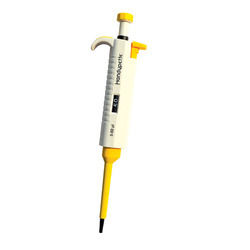
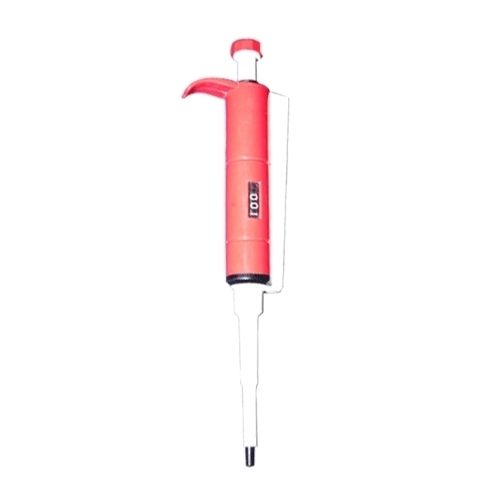
We are counted amongst the leading manufacturers and suppliers of this quality range of Non Autoclavable Micropipette. For maintenance of our reputation, we engage in using high-grade raw materials and advanced machines. Thus, its performance, sturdiness, functional life, accuracy and user friendly nature is highly acclaimed in the market.
Features:
- User friendly
- Sturdy construction
- High durability
Accurate and Precise Handling for Laboratory TasksThis micropipette delivers laboratory-grade accuracy (0.5%) and precision (0.2% CV, model-dependent), making it ideal for routine experiments that require reliable results. The instrument's compatibility with standard universal tips and ease of calibration allow for seamless integration into daily laboratory workflows.
Ergonomic Design Maximizes User ComfortIts soft, low-force plunger mechanism and lightweight pen-type shape reduce strain during repetitive pipetting, while color coding and a digital or analog display enhance usability. These features combine to make long pipetting sessions more manageable without compromising precision.
FAQ's of Non Autoclavable Micropipette:
Q: How do I adjust the volume on this micropipette?
A: To adjust the volume, simply rotate the adjustment knob located on the pipette is upper end until the desired volume appears on the three-digit digital volumeter or analog scale. Make sure the set volume is within the pipette's specified range for your particular model.
Q: What types of pipette tips are compatible with this micropipette?
A: This micropipette is compatible with standard universal pipette tips, making it easy to find and use replacement tips commonly available in most laboratories.
Q: When should I select a non-autoclavable micropipette over an autoclavable model?
A: Choose a non-autoclavable micropipette when routine tasks do not require sterilization between uses. This type is ideal for chemical laboratories where microbial contamination control is not the primary concern.
Q: Where is this micropipette best used and why?
A: It is best used in chemical laboratories for routine liquid handling tasks, as it provides accurate measurement, easy adjustment, and is lightweight for extended use, though it is not intended for clinical or microbiological applications that require sterilization.
Q: What process should I follow to maintain accuracy and longevity?
A: Clean the micropipette regularly with appropriate reagents, avoid exceeding the temperature resistance of 60C, store it vertically on a stand, and replace tips after each use to maintain accuracy and prevent contamination.
Q: What are the main benefits of its ergonomic and lightweight design?
A: The ergonomic pen-type structure and lightweight build (20-50 grams) help minimize hand fatigue, increase ease of pipetting, and allow for comfortable operation during prolonged laboratory tasks.







 English
 Spanish
 French
 German
 Italian
 Chinese (Simplified)
 Japanese
 Korean
 Arabic
 Portuguese


 Send Inquiry

