Product Description
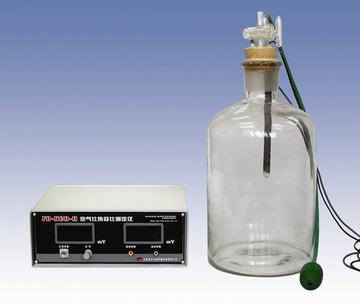
| MEASURING INSTRUMENT FOR SPECIFIC HEATING RATIO OF AIR | | Description:
The measuring of the air specific heating ratio is an important experiment in the education of general physics, so it has been listed into the educational program. This experimental instrument has made significant improvements to the traditional ones from home and abroad: Using diffusion silicon pressure sensor to measure air pressure, and using AD590 integrated temperature sensor to measure temperature.
Details: | Sensitivity of diffusion silicon pressure sensor: | 20 mV/kPa, | | Sensitivity of AD590 integrated | | | Temperature sensor: | 1 A/oC. | | |
Precision Air Heating MeasurementDesigned to facilitate accurate determination of air's specific heating ratio, this laboratory equipment integrates innovative measuring and safety technologies. Digital temperature and airflow controls streamline operation, while the high-quality PT-100 sensor ensures measurement accuracy suitable for advanced scientific experiments.
Robust Design and SafetyConstructed with stainless steel and borosilicate glass, the instrument is engineered for enduring laboratory use. Glass wool insulation minimizes heat loss, and built-in over-temperature protection ensures safe operation. Its CE certification guarantees compliance with international safety standards.
User-Friendly & VersatileWith intuitive digital displays and controls for both temperature and airflow, this instrument is tailored for ease of use. The bench-top design and moderate weight enhance portability, making it well-suited for use in a variety of laboratories across India.
FAQ's of MEASURING INSTRUMENT FOR SPECIFIC HEATING RATIO OF AIR :
Q: How does the instrument measure the specific heating ratio of air?
A: The instrument measures the specific heating ratio by precisely controlling and monitoring the airflow through a rotameter and heating the air using an electrical immersion heater. A PT-100 sensor tracks temperature changes, and the digital controller allows for accurate adjustments, ensuring reliable calculation of thermal properties.
Q: What makes this measuring instrument suitable for laboratory use?
A: Its robust construction, user-friendly digital controls, quick set-up bench-top design, and safety features like over-temperature cut-off make it ideal for laboratory environments. The instrument also boasts CE certification and 1% reading accuracy, meeting academic and research standards.
Q: When is this equipment typically used in the lab process?
A: It is most commonly used during experiments that require precise determination of the air's specific heating ratio, particularly in studies of thermodynamics, heat transfer, and material properties within educational and research settings.
Q: Where can this instrument be mounted or installed?
A: The device is designed as a bench-top model, suitable for easy placement and secure operation on laboratory tables or testing benches, with dimensions of 600 mm x 400 mm x 750 mm.
Q: What is the process for operating the instrument safely?
A: Operation involves powering the device on, adjusting the air flow using the rotameter, setting the desired temperature via the controller, and monitoring the digital display. Over-temperature protection and indicator lights assist users in maintaining safe and effective test conditions.
Q: What benefits do users gain from this instrument?
A: Users benefit from high measurement accuracy, durability due to sturdy construction, efficient heat insulation, and straightforward, safe operation. Its compliance with CE standards further ensures reliability for educational and industrial applications.







 English
 Spanish
 French
 German
 Italian
 Chinese (Simplified)
 Japanese
 Korean
 Arabic
 Portuguese



 Send Inquiry

