Product Description
Specifiactions:- Platinum micro crucible sizes : 1 ml, 3 ml, 5 ml
- Platinum crucible j lawrence smith type
- Platinum dish sizes : 030 ml, 050 ml, 060 ml, 075 ml, 100 ml, 150 ml, 250 ml, 500 ml, 700
- Platinum micro dish sizes : 10 ml, 15 ml, 20 ml
| Capacity (ml) | Top diameter (mm) | height (mm) | crucible | reinforced rim | lid |
| 10 ml | 26 | 29 | 8 | 9.5 | 2.5 |
| 15 ml | 29 | 33 | 11 | 13 | 4 |
| 20 ml | 32 | 36 | 16 | 18 | 4.5 |
| 25 ml | 35 | 39 | 20 | 23 | 5 |
| 30 ml | 37 | 41 | 25 | 28 | 5 |
| 35 ml | 39 | 43 | 29 | 32 | 6 |
| 40 ml | 41 | 46 | 33 | 36.5 | 7 |
| 50 ml | 44 | 49 | 42 | 46. L0 | 8 |
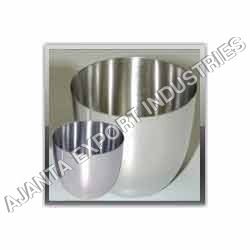
This laboratory crucible is made with a minimum platinum purity of 99.95%, ensuring maximum resistance to corrosion and excellent performance during demanding laboratory processes. The smooth, mirror-polished surface minimizes contamination while facilitating sample recovery and cleaning. The construction includes a tightly fitting lid and robust basin to meet varied analytical and fusion requirements.
Wide Compatibility and VersatilityCompatible with muffle furnace, open flame, and induction heating methods, this platinum ware crucible is versatile for a range of laboratory applications including sample ashing, melting, fusion, and preparation. With temperature resistance up to 1700C and high tolerance to rapid temperature fluctuation, it is ideal for continuous laboratory use.
Precision and CustomizationOffered in various standard laboratory sizes, this platinum crucible can also be tailored to your specific requirements. Each piece is clearly marked with an embossed lot and grade number, which supports laboratory workflow, ensures traceability, and confirms the authenticity and grade of your investment in labware.
FAQ's of Lids Basins Platinum Ware Crucible:
Q: How should I use the Lids Basins Platinum Ware Crucible for sample preparation?
A: For sample preparation, place your specimen in the crucible, cover it with the tightly fitting lid, and select the suitable heating method-muffle furnace, open flame, or induction-according to your protocol. The crucible's high temperature resistance and mirror-polished finish ensure optimal performance and minimal sample contamination.
Q: What makes this platinum crucible suitable for continuous laboratory operation?
A: The crucible's robust platinum construction, high purity, low contamination risk, and superior corrosion resistance make it particularly durable. Its ability to withstand rapid temperature changes and accommodate frequent cleaning guarantees reliability during continuous use in laboratory settings.
Q: When should I choose a platinum crucible over alternatives like porcelain or steel?
A: Choose a platinum crucible when working with highly corrosive samples or requiring extremely low contamination-for example, in trace analysis, ashing, melting, or fusion. Its high chemical stability and durability outperform alternatives in demanding analytical and preparatory tasks.
Q: Where can I source this crucible and are size customizations available?
A: This platinum ware crucible is available through authorized laboratory equipment distributors, exporters, manufacturers, suppliers, and traders in India. Standard sizes are offered, but you can request customized dimensions to fit your specific laboratory needs.
Q: What is the recommended process for cleaning and maintaining the crucible?
A: Clean the crucible using standard laboratory procedures suitable for platinum, such as gently washing with dilute acids and rinsing with distilled water. The smooth, polished surface makes it easy to keep free from residues, ensuring consistent performance with minimal maintenance.
Q: What benefits does the platinum crucible provide compared to other materials?
A: Benefits include exceptional resistance to chemical attack, negligible contamination, high durability, and the ability to safely handle samples at temperatures up to 1700C. Its reusable nature and precise weight tolerance (0.001g) also contribute to accurate and cost-effective laboratory operations.







 English
 Spanish
 French
 German
 Italian
 Chinese (Simplified)
 Japanese
 Korean
 Arabic
 Portuguese


 Send Inquiry

