Product Description
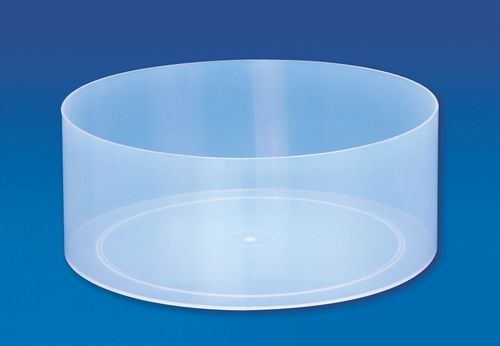
LECLANCHE CELL POT
Blown in Polypropylene, this Pot is used for making Leclanche Cell. This Pot too has very good contact clarity & excellent chemical resistance.Material Polypropylene
| PARTICULARS | PACKING |
|---|
| Leclanche Cell Pot | 12 Pc |
|
Optimized Porous Design for Laboratory EfficiencyLeclanche Cell Pots are engineered with a highly porous unglazed structure, maximizing ion transfer essential for primary cell functions while restricting direct reagent mixing. This design boosts chemical reaction efficiency and supports a safe experimental environment. The cylindrical shape and standardized dimensions make it ideal for consistent academic and research applications, fitting seamlessly into various experimental setups.
Versatility in Educational and Research SettingsThese cell pots are widely used in schools, colleges, and research laboratories across India for demonstrating the operational principles of primary cells. Their chemical compatibility with common reagents, along with reliable zinc and carbon electrodes, supports a broad spectrum of electrochemical experiments. The product's manual operation and self-generating power require no external source, making it user-friendly for learners and researchers.
Durability and ReusabilityDesigned for repeated use, the Leclanche Cell Pot withstands temperatures up to 150C and resists corrosion, thanks to its robust construction. With appropriate cleaning after each use, the pot maintains performance over multiple experiments. Whether individually packed or in customizable bulk orders, these pots cater to varied institutional needs.
FAQ's of LECLANCHE CELL POT:
Q: How does the porosity of the Leclanche Cell Pot enhance laboratory experiments?
A: The optimized porosity of the cell pot facilitates efficient electrolyte ion transfer while preventing the direct mixing of zinc and manganese dioxide reagents. This results in reliable and effective chemical reactions during laboratory experiments and classroom demonstrations.
Q: What is the correct process to assemble and use the Leclanche Cell Pot in a laboratory setting?
A: To assemble, insert the supplied zinc and carbon electrodes into the pot, fill it with appropriate chemical solutions such as ammonium chloride and manganese dioxide, and secure the terminals. The cell begins to generate a voltage (approx. 1.5 V) without needing an external power source, making it suitable for demonstrating electrochemical principles.
Q: When should the Leclanche Cell Pot be cleaned and how can it be reused?
A: The cell pot should be thoroughly cleaned after each experiment to remove residual chemicals and prevent cross-contamination. With proper cleaning and maintenance, the pot can be reused for multiple laboratory sessions, ensuring cost-effectiveness and sustainability.
Q: Where is the Leclanche Cell Pot commonly used?
A: These pots are commonly utilized in schools, colleges, and research institutions across India for laboratory experiments, science education, and demonstration of primary cell functions.
Q: What are the main benefits of using a Leclanche Cell Pot for electrochemical experiments?
A: The main advantages include high chemical resistance, maximum porosity for ion transfer, reusability, and compatibility with standard laboratory reagents. Its manual operation and lack of electronics simplify the teaching and demonstration process, making it ideal for educational and scientific use.
Q: Is external power supply required for operating the Leclanche Cell Pot?
A: No, the Leclanche Cell Pot is a self-generating chemical cell and does not require any external power supply. Its voltage is produced through chemical reactions between the contained electrodes and reagents.








 English
 Spanish
 French
 German
 Italian
 Chinese (Simplified)
 Japanese
 Korean
 Arabic
 Portuguese


 Send Inquiry

