Product Description
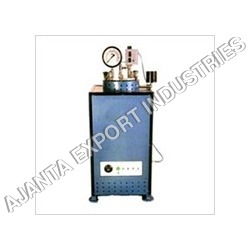
Owing to our in-depth industry knowledge, we are involved in offering a wide range of Laboratory Cement Autoclave. At our sophisticated manufacturing unit, these products are manufactured using quality testing components. Various tests can be conducted using these machines by applying constant steam pressure with corresponding constant temperature. With its help the change in specimen length is measured in process of drying, moisturizing and shrinkage apparatus. In order to meet the specific demands of our clients, our products are offered in various technical specifications and customized finishes.Advanced Performance for Cement Quality AssuranceThis cement autoclave is engineered specifically for laboratory environments, enabling precise evaluation of cement soundness. Its stainless steel chamber coupled with immersion-type heating delivers uniform thermal conditions, while automatic pressure and temperature controls optimize test reliability. The inclusion of thick mineral wool insulation further maintains consistent internal conditions for accurate, repeatable results. Choose this autoclave for dependable and rigorous cement testing.
Comprehensive Safety & Durability FeaturesThe laboratory cement autoclave is equipped with a durable stainless steel cylinder and a spring-loaded safety valve for maximum operational safety. Its hydrostatic test pressure capacity of 70 kg/cm2 exceeds standard operating requirements, delivering additional assurance. The horizontal mounting on a robust stand ensures stability during operation, and reliable manual controls enable straightforward operation even in busy lab settings.
FAQ's of Laboratory Cement Autoclave:
Q: How is the Laboratory Cement Autoclave used in testing cement soundness?
A: The Laboratory Cement Autoclave exposes cement specimens to controlled high-pressure steam to assess soundness. By subjecting samples to a working pressure of 21 kg/cm2, the unit helps identify expansion caused by impurities, ensuring cement quality meets specified standards.
Q: What are the key safety features of this cement autoclave?
A: This autoclave is equipped with a spring-loaded safety valve and can withstand a hydrostatic test pressure of 70 kg/cm2. Thick mineral wool insulation and automatic controls maintain safe, stable operations during every test cycle.
Q: Where is the laboratory cement autoclave typically used?
A: This autoclave is primarily used in laboratory environments, such as quality control departments of cement manufacturers, research institutions, and testing laboratories focused on construction materials.
Q: What is the process for operating the Laboratory Cement Autoclave?
A: To operate, specimens are placed in the stainless steel chamber, the autoclave is sealed, and the manual control is used to initiate the test. The immersion-type heating element brings the chamber to the required pressure and temperature, which is then maintained automatically during the test period.
Q: When should a sample be tested using a cement autoclave?
A: Samples should be tested whenever there is a need to verify cement soundness, usually during batch quality assurance or when developing new cement formulations. The autoclave provides a reliable means to detect potential expansion issues early in the process.
Q: What benefits does the automatic control system provide?
A: Automatic pressure and temperature controls enhance test consistency and repeatability. They reduce user intervention and minimize human error, making the testing process more streamlined and reliable.







 English
 Spanish
 French
 German
 Italian
 Chinese (Simplified)
 Japanese
 Korean
 Arabic
 Portuguese



 Send Inquiry

