Product Description
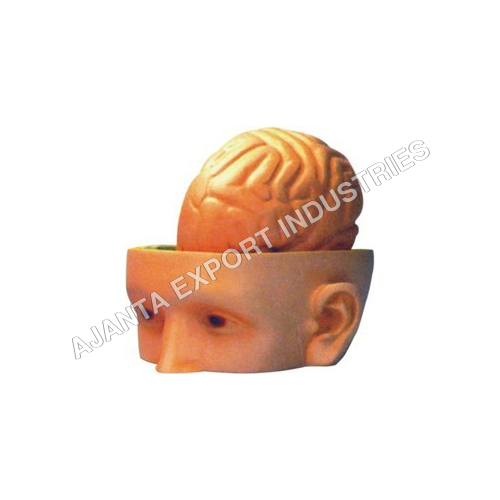
Model shows the human brain dissectable into 2 parts, can be taken out, showing the cranial nerves and the important internal parts of the skull. Numbered with English Key Card. A life size model of the human head mounted on base. Detailed Anatomical RepresentationThis three-part head and brain model provides an accurate depiction of cranial anatomy, allowing students to visualize and understand internal structures. The model's PVC construction ensures durability for frequent handling and repeated educational sessions in nursing institutes and healthcare training environments.
Practical Applications in EducationDesigned specifically for nursing institutes, the model enables interactive learning. It can be disassembled into three parts, offering clear insights into the relationships between different brain areas, cranial nerves, and skull features. Instructors can demonstrate complex concepts effectively.
FAQ's of Human Head & Brain - 3 Parts:
Q: How is the Human Head & Brain model used in nursing institutes?
A: Nursing institutes use this model for teaching students about human cranial and brain anatomy. Its three-part design allows trainees to explore internal structures in detail, supporting both theoretical lessons and practical demonstrations.
Q: What material is the model made from, and why is it suitable?
A: The model is made from high-quality PVC, which is sturdy, easy to clean, and resistant to wear. This makes it ideal for frequent handling in educational settings, ensuring longevity and consistent usability.
Q: When is this model typically introduced in the nursing curriculum?
A: This anatomical model is usually introduced during foundational courses covering human anatomy and physiology, often in the initial stages of nursing education when students learn about head and brain structures.
Q: Where can you purchase or source this Human Head & Brain model?
A: The model is available from multiple channels as it is distributed, exported, manufactured, supplied, and traded by reputable companies. Interested buyers can reach out to designated distributors or suppliers for procurement.
Q: What is the process for maintaining or cleaning the model after use?
A: After use, the PVC model should be gently wiped with a damp cloth and mild detergent. Avoid using harsh chemicals to prevent damage to its surface, ensuring that it remains hygienic for repeated classroom use.
Q: What are the primary benefits of using this anatomical model in healthcare education?
A: The key benefits include enhanced visualization of the human head and brain, improved comprehension of complex anatomical relationships, and hands-on engagement. These advantages facilitate better retention and understanding among nursing students.







 English
 Spanish
 French
 German
 Italian
 Chinese (Simplified)
 Japanese
 Korean
 Arabic
 Portuguese





 Send Inquiry

