Product Description
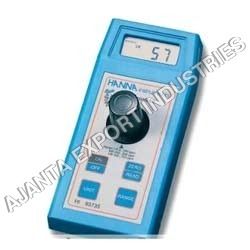
Hardness Meter Range of Total Hardness Tester in PPM, DH, and EH
Specifications:
| Range | LR 0 to 250 ppm
MR 200 to 500 ppm
HR 400 to 750 ppm
|
| Resolution | 1 ppm from 0 to 10 ppm
5 ppm from 100 to 750 ppm
|
| Accuracy | LR 5 ppm or 4% or reading,
whichever is greater
MR 7 ppm or 3% of reading,
whichever is greater
HR 10 ppm or 2% of reading,
whichever is greater
|
| Typical EMC Deviation | 5 ppm |
| Light Source | Light Emitting Diode @ 470 nm |
| Method | Adaptation for the EPA recommended
method 130.1. The reaction between calcium,
magnesium and the reagents causes
a red-violet tint in the sample
|
| Light Detector | Silicon photo cell |
| Environment | 0 to 50C (32 to 122F)
max 95% RH non-condensing |
| Battery Type/ Life | 1 x 9 volt/40 hours |
| Auto-Shut off | After 10' of non-use |
| Dimensions | 180 x 83 x 46 mm (7.1 x 3.3 x 1.8) |
| Weight | 290 g (10 oz.) |
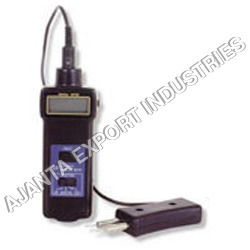
This handheld hardness tester supports several hardness scales-HL, HB, HRB, HRC, HV, and HS-enabling comprehensive measurements for a variety of metals. Its broad testing range and high accuracy make it suitable for applications in laboratories, factories, and quality control environments. With the Type D impact device and robust construction, users can confidently measure steel, iron, brass, copper, and aluminum.
Portable and User-Friendly DesignThe tester features a compact, lightweight build made from ABS plastic and a metal probe, weighing just 450-900 grams. Its ergonomic rectangular shape, digital LCD display, and push-button controls offer exceptional portability and ease of operation. Features such as auto power-off, backlit display, and memory storage further enhance user experience for professionals on the go.
FAQ's of Hardness Meter:
Q: How do I operate the handheld hardness meter for accurate measurements?
A: To operate the meter, simply install 2 AA batteries, switch on the device using the push-button controls, select your desired hardness scale, and press the probe firmly against the metal surface. The device gives a reading within 1 second. Ensure surfaces are clean and stable for best accuracy.
Q: What materials can I test using this hardness meter?
A: This meter is designed to test the hardness of various metals, including steel, iron, aluminum, copper, and brass. Its multiple supported scales and probe type make it versatile enough for broad industrial applications.
Q: When should I calibrate the hardness meter, and is calibration included?
A: Factory calibration is included, so the device is ready for use upon delivery. Recalibration is recommended if you notice inconsistent readings or after extended periods of use, particularly in critical quality control environments.
Q: Where can I use this digital hardness tester?
A: This meter is built for laboratory, workshop, and field use. Its portable design, robust ABS plastic and metal construction, and battery operation allow it to function effectively in various professional settings, including those with humidity up to 90% RH and temperatures from 0C to 40C.
Q: What is the process for storing and exporting test data?
A: The meter can store up to 100 groups of measurement data. For exporting, an optional USB output is available to quickly transfer stored data to a computer or other devices, facilitating further analysis and record-keeping.
Q: How does the alarm function benefit users during hardness measurements?
A: The built-in alarm function notifies users instantly when readings fall outside pre-set high or low limits, ensuring quality control and saving time by allowing immediate corrective action.






 English
 Spanish
 French
 German
 Italian
 Chinese (Simplified)
 Japanese
 Korean
 Arabic
 Portuguese


 Send Inquiry

