Product Description
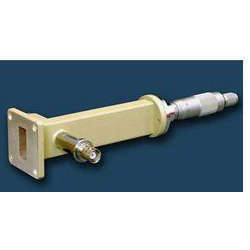
Gunn oscillators are used to generate the microwave signal and its micrometer is used to tune the output frequency of gunn oscillator. We are manufacturing gunn oscillator from 4ghz to 110ghz.
Specifications:
| Frequency Range | Min. Output Power | Waveguide Type |
Flange Type
(UG-/U)
|
|
4.4 4.9 (Ghz)
|
10 (mW)
|
187 (WR-)
|
149 A
|
|
6.5 - 7.5
|
10
|
137
|
344
|
|
8.6 - 11.6
|
10
|
90
|
39
|
|
12.6 - 15.5
|
10
|
62
|
419
|
|
20.0 - 24.5
|
10
|
42
|
595
|
|
34.0 - 36.0
|
10
|
28
|
599
|
Versatile Frequency and Power PerformanceWith a frequency range spanning from 8 GHz to 12 GHz and output power up to 10 dBm, this Gunn Oscillator is suitable for a wide breadth of applications. Its frequency can be finely tuned manually, offering flexibility for laboratory experiments and high-precision system integrations. The low phase noise performance enhances accuracy in advanced signal and radar testing environments.
Robust Construction and Environmental ProtectionHoused in an anodized aluminum die-cast enclosure, the Gunn Oscillator is engineered for durability and longevity. Its corrosion-resistant finish and reliable performance across -20C to +70C make it well-suited for various operational environments. The flange or panel mount design ensures easy integration and secure installation.
FAQ's of Gunn Oscillator:
Q: How is the frequency of the Gunn Oscillator adjusted?
A: The frequency of the oscillator is mechanically tuned via an adjustment screw, allowing precise manual control anywhere between 8 GHz to 12 GHz. This enables users to adapt the device for specific research or testing requirements.
Q: What are the main benefits of using this Gunn Oscillator in laboratory settings?
A: This oscillator offers tunable frequency, low phase noise, a stable output (0.5% frequency stability), and a compact, rugged design. These qualities make it ideal for scientific experimentation, measurement setups, and demanding research applications.
Q: When should I use a Gunn Oscillator with low phase noise?
A: Low phase noise is critical in applications requiring high signal purity, such as radar systems, precision measurement equipment, and advanced microwave research. This oscillator ensures clearer signals and improved data accuracy in such scenarios.
Q: Where can this Gunn Oscillator be installed or mounted?
A: The device supports flange or panel mounting, enabling secure installation in laboratory racks, testing benches, or integrated systems. Its lightweight and compact form make it compatible with various setups.
Q: What process is involved in setting up the power supply for this oscillator?
A: The Gunn Oscillator operates from an external DC supply (5 to 12 V DC). Connect a suitable regulated power source to the designated power input for reliable operation. Ensure that the supply voltage is within the specified range to prevent equipment damage.
Q: How does the anodized finish benefit the oscillator's longevity?
A: The anodized aluminum die-cast housing offers enhanced resistance to corrosion and physical wear, extending the oscillator's lifespan especially in demanding or humid environments.
Q: What usage scenarios is this Gunn Oscillator best suited for?
A: It is ideal for use as a signal source or in testing and development within microwave and millimeter wave research labs, as well as radar system prototyping and validation.







 English
 Spanish
 French
 German
 Italian
 Chinese (Simplified)
 Japanese
 Korean
 Arabic
 Portuguese


 Send Inquiry

