Product Description
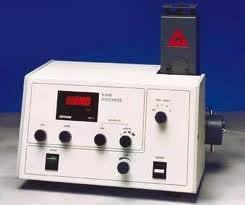
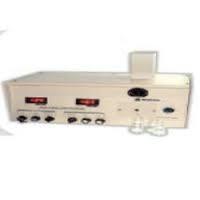
Flame Photometer
AJANTA EXPORT INDUSTRIES are manufacturer, supplier and exporter of Flame Photometer.
Specifications:
Digital Flame Photometer | With fitted (Na & K) 3½ digit LED display (ppm) along with compressor and other accessories Ca & Li filter can be provided on request |
Digital Clinical Flame Photometer | Dual channel single aspiration with filter (Na & k) for medical use. Final result in meq/L 2½ digit dual LED display for simultaneous results along with compressor & accessories |
Microprocessor flame photometer | With Sodium (Na) and Potassium (K) filters, upto 5 points calibration, direct readout in pp, & meq/l, auto filter selection, auto ignition, 24 x 4 line LCD display, Single Aspiration, RS232 interface, printer attachments facility, with compressor and other accessories for lab & medical use. Ca & Li Filers and optional at extra cost |
Analyze sodium, potassium, calcium, and lithium simultaneously with up to four detection channels. The instrument's direct calibration feature ensures accurate readings while interchangeable filters and a corrosion-resistant nebulizer accommodate a variety of samples, making it proficient for routine hospital and laboratory analyses.
Robust and User-Friendly DesignConstructed with a powder-coated mild steel body and borosilicate glass nebulizer, the photometer is both durable and resistant to common laboratory chemicals. Features such as a digital LED display and manual or automatic flame selection make operation simple and efficient, even for busy laboratory personnel.
Quick Results with High PrecisionExperience rapid, reliable results with a display resolution of 0.1 ppm and a 2% accuracy of reading. The inbuilt oil-free compressor, easy sample aspiration, and temperature resistance up to 60C enable continuous operation without frequent maintenance, ensuring consistent performance for clinical or soil testing.
FAQ's of Flame Photometer:
Q: How is the calibration process carried out for each element in this flame photometer?
A: Calibration is performed individually for sodium, potassium, calcium, and lithium through direct calibration for each element. Users can easily follow on-display instructions to ensure precise and accurate readings for their specific analysis requirements.
Q: What are the main applications of this flame photometer in laboratory settings?
A: This flame photometer is primarily used for the quantitative analysis of sodium, potassium, calcium, and lithium in biological fluids, such as blood and urine, and in soil samples. It is widely utilized in hospitals and research laboratories across India for routine clinical assessments and environmental studies.
Q: When should the interchangeable emission filters be used?
A: Interchangeable emission filters should be used when switching between different element measurements (Na, K, Ca, Li). This ensures optimal selectivity and sensitivity for each element, maintaining the accuracy and reliability of analytical results.
Q: Where is this flame photometer best suited for installation and use?
A: The instrument's compact and rectangular design makes it ideal for use in hospital diagnostic laboratories, academic institutions, and soil testing facilities, particularly in settings that demand precision and ease of operation. It can be easily accommodated on laboratory benches due to its moderate size.
Q: What is the sample aspiration rate, and why is it important?
A: The flame photometer features a sample aspiration rate of 5-6 ml/min. This steady rate allows for consistent sample introduction, which contributes to the reliability of analysis and quick throughput, essential for both routine and high-volume testing environments.
Q: How does the inbuilt oil-free air compressor benefit users?
A: The oil-free air compressor ensures a clean, maintenance-free air supply for efficient flame generation, eliminating contamination risks and reducing the need for frequent servicing. This leads to uninterrupted analysis and longer instrument lifespan.
Q: What are the advantages of having both manual and automatic flame selection controls?
A: Having both manual and automatic flame selection allows users flexibility based on their expertise and specific application needs. While manual selection suits experienced users desiring greater control, automatic selection benefits high-throughput settings, enhancing operational efficiency and consistency.






 English
 Spanish
 French
 German
 Italian
 Chinese (Simplified)
 Japanese
 Korean
 Arabic
 Portuguese


 Send Inquiry

