Product Description
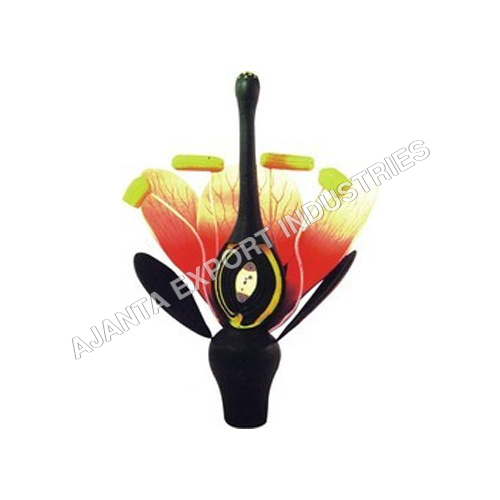
Dissect Flower to Study Angiosperm Reproduction. Each of the eight parts of the flower model, enlarged 10x, represents one of the unique structural components, such as the sepals, petals, stamens, and pistil. Fertilization is shown, with pollen grains on the stigma; one pollen tube is shown penetrating the micropyle. The anthers are sectioned, and the ovary is dissected to show the female gametophyte. The model also depicts the scenario for double fertilization. The eight-piece model is mounted on a base Distinctive Features of Dicot Flower Live SpecimenOur Dicot Flower Live Specimen is crafted to highlight essential botanical characteristics. These flowers have visibly broad leaves with reticulate venation and maintain a tap root system, aiding in accurate scientific study. The arrangement and number of petals, along with centrally placed reproductive organs, are carefully modeled as per standard flora guides for identification and lab use.
Ideal for Laboratory and Hospital ApplicationsSpecially cultivated and selected, these flowers serve as model specimens for educational settings, research labs, and hospital environments. The durable PVC and rubber material ensures these flowers withstand frequent handling without losing their morphological authenticity, making them suitable for observations, experiments, or teaching demonstrations.
FAQ's of Dicot Flower:
Q: How can I identify a dicot flower specimen in the laboratory setting?
A: Dicot flowers are identified by their four to five symmetrical petals, broad leaves with reticulate venation, presence of two cotyledons, tap root system, and central reproductive organs (stamens and pistil). Standard botanical size and coloration also assist in correct identification.
Q: What is the typical use of this live dicot flower specimen?
A: These specimens are primarily used in classrooms, laboratories, and hospitals for teaching, research, and demonstrations related to plant structure, classification, and reproductive biology.
Q: When should I use a live dicot flower specimen in plant biology studies?
A: Live dicot flower specimens are best used during lessons or research that focus on flower anatomy, plant classification, or reproductive processes, offering an accurate representation for direct observation and experimentation.
Q: Where are these dicot flower specimens sourced from?
A: These specimens are cultivated from terrestrial environments, requiring moderate sunlight exposure and well-drained soil, ensuring robust growth and authentic botanical features.
Q: What is the process for preparing a live dicot flower specimen for educational use?
A: Specimens are harvested at optimal maturity, carefully cleaned, and then preserved (or modeled using PVC and rubber) to retain key morphological traits, enabling detailed and hands-on study in lab environments.
Q: How does using a live dicot specimen benefit plant biology students?
A: Real specimens provide tactile and visual experiences, help students differentiate between monocots and dicots, and allow direct observation of features like petal count, venation, and reproductive organs, enhancing comprehension and retention.







 English
 Spanish
 French
 German
 Italian
 Chinese (Simplified)
 Japanese
 Korean
 Arabic
 Portuguese


 Send Inquiry

