Product Description
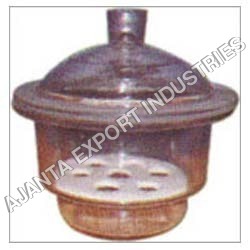
We are offering our clients a huge assortment of Desiccater. Our range comprises Glass Desiccater, Plastic Desiccater and plain Desiccater. To ensure the everlasting performance, these products are fabricated using high-grade raw material and advanced technology. Prior to dispatch these products are properly examined by the team of deft experts to provide assured quality product.
Features:
Highly durable
Work efficiency
Reasonable price
Air-Tight and Durable ConstructionEngineered for reliability, this laboratory desiccator features a robust air-tight silicone rubber gasket and a transparent vacuum-compatible lid. The combination of borosilicate glass and polycarbonate ensures durability and clear visibility, allowing safe storage and monitoring of moisture-sensitive samples.
Simple Operation and MaintenanceThe manual control knob and easy-to-open design streamline your workflow. This desiccator is reusable and can be cleaned without difficulty, while the white porcelain plate supports efficient placement and retrieval of desiccants or samples.
Compliant and Versatile DesignCompliant with ISO and ASTM standards, this desiccator meets international quality requirements. Ideal for labs handling humidity-sensitive materials, it is available in various capacities, making it suitable for diverse laboratory settings and research needs.
FAQ's of Desiccator:
Q: How do I use this desiccator for storing moisture-sensitive materials?
A: To store moisture-sensitive materials, place your samples on the porcelain plate inside the desiccator. Add the appropriate desiccant beneath the support plate, ensure the silicone gasket is properly seated, then close the lid and tighten the knob to create an air-tight seal. Vacuum can be applied if required by your protocol.
Q: What materials are used in the construction of this laboratory desiccator?
A: The desiccator features a borosilicate glass body for chemical resistance, a vacuum-compatible transparent polycarbonate or glass lid, and a robust silicone rubber gasket for sealing. The base includes a white porcelain plate, with plastic components enhancing usability and safety.
Q: When is it necessary to replace the desiccant inside the desiccator?
A: Replace the desiccant once it becomes saturated or according to your laboratory's guidelines. Many desiccants include color indicators for saturation. Regular replacement ensures effective moisture control and sample integrity.
Q: Where can this desiccator be used and by whom?
A: This desiccator is ideal for laboratory environments handling moisture-sensitive processes. It is widely used by researchers, lab technicians, and quality control personnel in educational, industrial, and research laboratories.
Q: What is the cleaning and maintenance process for the desiccator?
A: For cleaning, dismantle the unit, then wash the glass, polycarbonate lid, porcelain plate, and gasket using mild detergent and distilled water. Ensure all parts are thoroughly dried before reassembly to prevent moisture contamination.
Q: What are the key benefits of using this vacuum-compatible desiccator?
A: Key benefits include reliable air-tight storage for delicate samples, compatibility with vacuum applications, reusability, easy maintenance, and compliance with international standards, ensuring maximum sample protection and laboratory efficiency.







 English
 Spanish
 French
 German
 Italian
 Chinese (Simplified)
 Japanese
 Korean
 Arabic
 Portuguese


 Send Inquiry

