Product Description
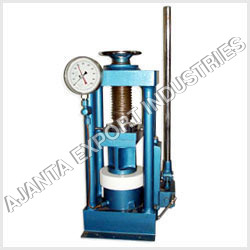
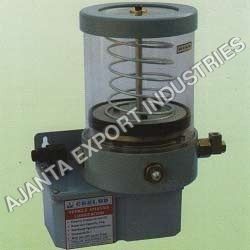
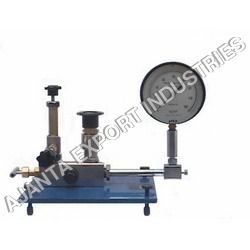
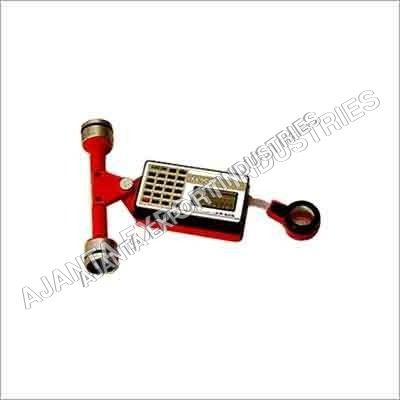
Driven with perfection, we are engaged in catering to the variegated requirements of the customers by bringing forth a comprehensive range of Concrete Testing Lab Equipments. The products offered by our organization is precisely manufactured using high quality raw material and cutting-edge tools & technology. These concrete technology lab are also tested by our quality experts on the basis of its durability and performance.
Listed are the attributes:
- Long service life
- High functionality
- Dimensional accuracy
Superior Quality and VersatilityOur Concrete Testing Lab Equipments are engineered for robust performance in diverse testing scenarios. With options covering a wide range of compressive and flexural strength assessments, these instruments accommodate different sample sizes and laboratory requirements. The modularity and choice of features make them suitable for large-scale laboratory environments and on-site applications at construction projects.
Precision, Reliability, and ComplianceEach equipment piece is meticulously crafted to meet international standards such as IS, ASTM, and BS, ensuring accurate and repeatable results. Selected models incorporate digital displays for precise readings, while robust stainless steel construction guarantees long-lasting usage even under tough working conditions.
FAQ's of Concrete Testing Lab Equipments:
Q: How is the compressive strength of concrete measured using your lab equipment?
A: The compressive strength of concrete is measured by placing a prepared cube or cylinder in the strength tester, which applies force up to 2000 kN. The load at failure is digitally or mechanically recorded, allowing users to assess the material's strength against standard requirements.
Q: What mould sizes are available for preparing concrete samples?
A: We provide cube moulds in 50 mm, 100 mm, 150 mm, and 200 mm sizes, enabling you to prepare samples in compliance with various test standards and specific project demands.
Q: Which tests for concrete workability can be performed with this equipment?
A: The equipment set includes both a slump test apparatus (featuring a slump cone, base plate, and tamping rod) and a compaction factor apparatus, allowing comprehensive workability assessments for fresh concrete.
Q: When should curing tanks be used during the concrete testing process?
A: Curing tanks, available with capacities ranging from 100 to 1000 liters, should be used after casting the concrete specimens. These tanks maintain a controlled environment to cure samples for specified periods, ensuring accurate strength and durability results.
Q: Where can these concrete testing devices be deployed?
A: Our equipment is suitable for use in concrete testing laboratories, quality control centers, and directly on construction sites thanks to several portable models designed for field applications.
Q: What are the benefits of using digital display models?
A: Digital display models provide clear, immediate readings, reducing the risk of human error and ensuring higher accuracy in test results, which streamlines the documentation and quality assessment processes.
Q: What are the advantages of stainless steel construction and powder-coated finishes?
A: Stainless steel offers exceptional resistance to rust and corrosion, while powder-coated coatings enhance durability and simplify maintenance, ensuring the equipment's long service life even in harsh environments.







 English
 Spanish
 French
 German
 Italian
 Chinese (Simplified)
 Japanese
 Korean
 Arabic
 Portuguese



 Send Inquiry

