Product Description
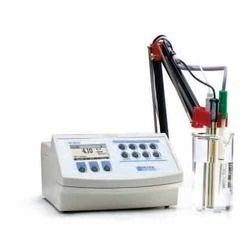
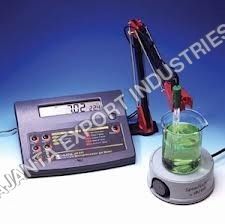
Benchtop Meter
The HI 3512 is a 2 channel professional benchtop meter with a graphic LCD, designed to provide accurate laboratory results. Channel 1 features pH/ORP/ISE and temperature measurement capability while channel 2 measures EC/TDS/NaCl/Resistivity and temperature. This instrument can measure using ORP electrodes (pH channel input), thanks to its capability to measure mV with a resolution up to 0.1 mV and ISE electrodes on ppm scale (pH channel input). The electrode type and unit selection capability and the ISE calibration in up to five calibration standard solutions make this instrument very useful for a large range of concentration solution measurements. HANNAs exclusive Calibration Check diagnostics system ensures accurate pH readings every time by alerting users of potential problems during the calibration process. The pH channel offers up to five point pH calibration with seven standard buffers (pH 1.68, 4.01, 6.86, 7.01, 9.18, 10.01 and 12.45) and up to two custom buffers. Messages on the graphic LCD offer directions for easy and accurate calibration for both channels as well as diagnostics to alert the user when calibration or measurement issues are detected.
Trustworthy Acidity MeasurementObtain precise acidity readings in your laboratory using this high-quality benchtop digital meter. Built with mild steel, it ensures stability and accuracy for every measurement, enhancing your lab's efficiency.
Robust Construction for LaboratoriesDesigned specifically for laboratory use, the meter is constructed with mild steel, providing resistance to wear and corrosion. Its practical weight range ensures it remains stationary during critical procedures.
FAQ's of Benchtop Meter:
Q: How does the digital benchtop meter measure acidity in laboratory samples?
A: The digital benchtop meter operates by using a sensor to detect the pH level (acidity) of a solution. When the sample is placed under the probe, the device calculates and displays the acidity reading digitally, ensuring accuracy and reliability.
Q: What benefits does a mild steel construction provide for this benchtop meter?
A: Mild steel construction offers durability, robustness, and resistance to corrosion, making the benchtop meter ideal for rigorous laboratory environments where longevity and resilience are critical.
Q: When should this digital benchtop meter be calibrated?
A: For optimal performance, calibration should occur before initial use and then periodically as recommended in the user manual-commonly before every set of critical tests or after extended periods of inactivity.
Q: Where can I procure this benchtop acidity meter in India?
A: You can obtain this meter from authorized distributors, exporters, manufacturers, suppliers, and traders throughout India. Many reputable scientific equipment providers offer this reliable instrument.
Q: What is the standard process for using the benchtop meter to test acidity?
A: To measure acidity, prepare your sample and place it in the holding unit under the probe. Activate the device, allowing the sensor to analyze the pH level. The result will appear digitally for easy reading.
Q: What are the power requirements for this acidity meter?
A: This digital benchtop meter operates on a standard 230-volt supply, ensuring compatibility with common laboratory electrical systems in India.
Q: How does using this digital benchtop meter benefit laboratory research?
A: It delivers precise, quick acidity measurements, which support quality control and accurate analysis. Its durable design and user-friendly interface streamline laboratory workflows and enhance productivity.







 English
 Spanish
 French
 German
 Italian
 Chinese (Simplified)
 Japanese
 Korean
 Arabic
 Portuguese


 Send Inquiry

