Product Description
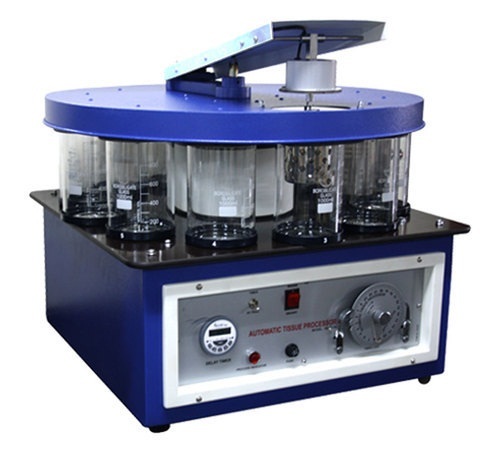
Tissue Processor is based on a pin-up timer through whichinfiltration time in each station can be programmed. For complete automaticdehydration, infiltration, and fixation of human, animal and plant tissues.Precision gear mechanism assures utmost convenience in operation. Automaticagitation allows efficient processing of tissues.
Technical Specification
| Size | 36MM |
| Type | Other |
| Subject | Other |
| Usage/Application | Laboratory |
| Material | Other |
| Colour | Blue |
| Brand | AJANTA |
| Model Name/Number | Aei-sh-4atp |
| Packaging Type | BOX |
| Weight | UPTO 120KG |
| Product Code | Aei-sh-4atp |
| Application | Labs |
| Frequency | 50/60 Hz cycle +5% |
| Voltage | 110/220/240V single phase |
| Weight | Upto 120 kg |
| Minimum Order Quantity | 1 Piece(s) |
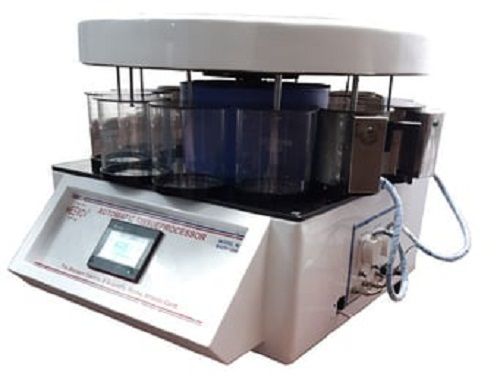
Innovative Design and TechnologyFeaturing advanced microprocessor control and digital LCD interface, the Automatic Tissue Processor streamlines sample preparation in histology labs. Its robust stainless steel and plastic build ensures reliability and easy maintenance, while the table-top, portable form factor enables flexible placement within any laboratory environment.
Comprehensive Safety and Efficient OperationSafety mechanisms such as overheat protection, alarm system, and power failure memory safeguard both users and samples. Automated features-including programmable cycles, automatic agitation, and a delay start function-deliver consistent results with minimal intervention, ensuring high precision and low noise efficiency.
FAQ's of Automatic Tissue Processor:
Q: How does the Automatic Tissue Processor benefit laboratory workflows?
A: This automated processor handles up to 80 samples per cycle, reducing manual labor and turnaround time. With programmable cycles and automatic agitation, it ensures consistent sample processing, improving workflow efficiency in histology and diagnostic settings.
Q: What safety features are incorporated in this tissue processor?
A: The equipment includes overheat protection, an alarm system, and a memory recall function in case of power failure. These elements protect users, safeguard samples, and prevent operation interruptions.
Q: When should the tissue processor be used during histological workflows?
A: Hospitals, research labs, and diagnostic centers utilize this processor during the tissue processing phase, after initial fixation and before embedding, ensuring optimal sample preparation for microscopic analysis.
Q: Where is this tissue processor suitable for installation?
A: Its compact, portable, and table-top design makes it ideal for placement in laboratory environments such as medical colleges, pathology labs, and hospital histology departments. It requires access to a stable electricity supply and a dry, dust-free area.
Q: What is the waste management and fume extraction provision in the device?
A: The processor integrates an advanced waste management system and fume extraction provision to ensure safe disposal of reagents and minimize user exposure to hazardous fumes during operation.
Q: How is the operating process controlled and monitored?
A: Operators utilize a touch keypad and LCD interface to program and monitor the machine. The system allows programmable cycles, displays real-time operation status, and features delay start and adjustable temperature settings up to 65C.







 English
 Spanish
 French
 German
 Italian
 Chinese (Simplified)
 Japanese
 Korean
 Arabic
 Portuguese


 Send Inquiry

