Product Description
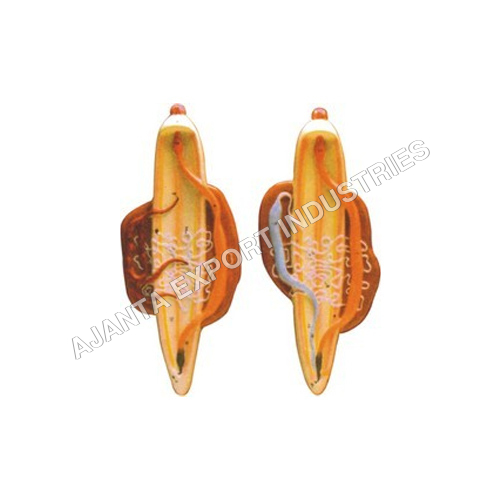
Show all internal organs like pharynx, intestine, testis, oviduct etc. Model mounted on board with numbered Key Card. Dissected model of Ascaris, enlarged, showing all important internal organs of male and female ascaris in detail. Mounted on a base Explore Sexual Dimorphism in AscarisOur preserved specimens display the vivid differences between male and female Ascaris worms, making them ideal for teaching and research. This side-by-side comparison enhances understanding of biological diversity, morphology, and reproductive anatomy in nematodes. Suitable for learners at various academic levels, they offer an interactive element for dissecting and detailed analysis.
Safe and Ready for Laboratory UseEach specimen is carefully preserved with a formalin or equivalent solution and sealed inside a robust glass jar, ensuring longevity and safety. The packaging maintains the physical integrity and coloration of the specimens, allowing repeated handling during practical classes or demonstrations. Always keep jars sealed when not in use, and store them at room temperature away from direct sunlight.
FAQ's of Ascaris , Male And Female:
Q: How should I store the Ascaris specimens to maintain their quality?
A: To keep the preserved Ascaris specimens in optimal condition, store them at room temperature, avoiding direct sunlight. Always ensure the glass jar remains tightly sealed when not in use to prevent evaporation or contamination of the preservative solution.
Q: What makes these preserved Ascaris specimens suitable for educational purposes?
A: These specimens are ideal for educational use because they clearly show the sexual dimorphism between male and female Ascaris, have a realistic coloration, and are appropriately sized for dissection and anatomical study in secondary schools, colleges, and universities.
Q: When can these specimens be used in the curriculum?
A: You can use these Ascaris specimens during units focused on invertebrate zoology, parasitology, comparative anatomy, or general biology. They provide tangible examples when discussing nematode morphology and reproductive systems.
Q: Where are these specimens primarily used?
A: The specimens are primarily used in biology or medical laboratories within secondary schools, colleges, universities, hospitals, and training centers where hands-on learning with real-world specimens is emphasized.
Q: What is the preservation process for these Ascaris specimens?
A: Each worm is immersed in formalin or a similar preservative shortly after collection, then sealed in a transparent glass jar. This process maintains the structural integrity, color, and visibility of anatomical features for extended periods.
Q: How does using these specimens benefit students?
A: By examining tangible Ascaris worms, students gain a deeper, more practical understanding of parasitic anatomy, lifecycle, and sexual differences. This hands-on experience enhances observation, dissection, and analytical skills.







 English
 Spanish
 French
 German
 Italian
 Chinese (Simplified)
 Japanese
 Korean
 Arabic
 Portuguese



 Send Inquiry

