Product Description
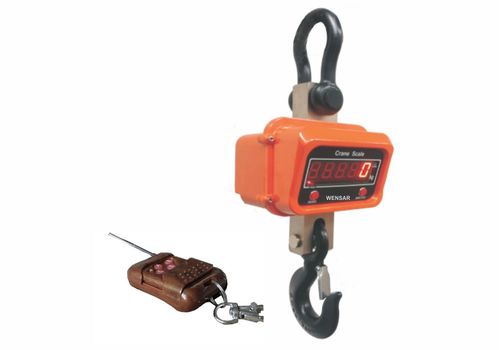
Salient Features
| | Based on E.M.F.C Technology |
| | A built in under hook for below weighing |
| | Density measurement for solid & liquid (Optional) |
| | RS232C Interface |
| | Percentage (%) Weighing |
| | Tare range up to max. Capacity |
| | Multiple Weighing Units |
| | Animal Weighing Function |
| | Counting Weighing mode |
| | Calibration with Internal weight |
| | Underhook Weighing |
| | White Back Light LCD display |
| | Density Determination Function |
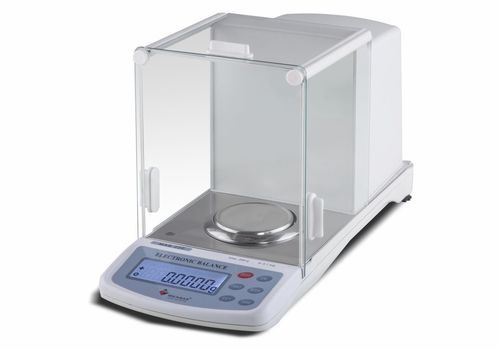
Precision at Its CoreDesigned for laboratories requiring meticulous accuracy, this analytical balance features an automatic internal calibration system, delivering precise results with each use. With readability to 0.1 mg and repeatability of 0.2 mg, scientists and researchers achieve consistent, trustworthy measurements even for delicate samples. Its blend of stainless steel and ABS materials ensures long-term durability.
User-Centric DesignThe balance features a digital LCD with backlight for clear visibility, a responsive touch or membrane keypad, and three glass draft shield doors for easy access. RS232 connectivity supports direct data output to printers or computers, streamlining record-keeping in research or quality control environments.
Comprehensive Laboratory SolutionEngineered for diverse analytical tasks, this balance serves as a versatile solution for laboratories across India and abroad. Each unit comes with standard accessories including a power adapter, user manual, and calibration certificate, ensuring quick setup and reliable operation. Its efficient stabilization and advanced features make it ideal for both routine and advanced analytical weighing.
FAQ's of Analytical Balance Internal Calibration:
Q: How does the automatic internal calibration work on this analytical balance?
A: The balance features an internal calibration mechanism that automatically calibrates the instrument at preset intervals or when environmental changes are detected. This ensures ongoing measurement accuracy without manual intervention, which is crucial for maintaining reliable results in laboratory environments.
Q: What is the purpose of the three-door glass draft shield?
A: The three-door transparent glass draft shield protects the weighing pan from air currents and external dust, minimizing disturbances that could affect readings. It also offers convenient access from multiple directions, assisting in the safe and accurate handling of sensitive samples.
Q: When should I use the full capacity tare function?
A: The full capacity tare function can be used whenever you need to subtract the weight of a container or holder before measuring a sample. This feature allows for direct sample weight readings any time, up to the maximum capacity of 220g, improving efficiency in repetitive lab workflows.
Q: Where can the analytical balance be installed for optimal performance?
A: For best results, install the balance on a stable, vibration-free surface within the specified operating temperature of 10-40C and humidity under 80% RH (non-condensing). Avoid placing it near drafts, direct sunlight, or sources of heat or vibration, as environmental factors can influence accuracy.
Q: What is the process for data transfer using the RS232 interface?
A: To transfer data, connect the analytical balance to a compatible computer or printer using the RS232 interface. This enables direct output of weighing results, facilitating efficient data management and traceability in laboratory settings.
Q: Which analytical applications benefit most from this balance's precision and features?
A: This analytical balance is ideal for laboratory weighing tasks that demand high accuracy, such as pharmaceutical research, chemical analysis, or quality control. Its precision, rapid stabilization, and automatic calibration make it indispensable for routine and advanced analytical procedures requiring exact measurements.
Q: What are the benefits of the balance's anti-vibration and overload protection features?
A: The anti-vibration design helps maintain measurement stability by reducing the influence of environmental vibrations, leading to more reliable results. Overload protection prevents equipment damage by alerting users when excessive weight is applied, safeguarding both the instrument and your samples.







 English
 Spanish
 French
 German
 Italian
 Chinese (Simplified)
 Japanese
 Korean
 Arabic
 Portuguese


 Send Inquiry

