Product Description
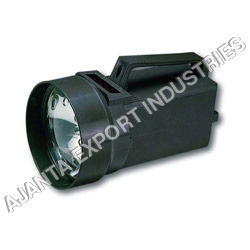
Analog Stroboscope
Specifications:
| Make | Model | Range |
|
|
| FUJI | ANALOG | 10000 RPM Contact Type Analog. Japan |
|
| LUTRON | DT 2234 B | Photo Range 1 Lakh RPM |
|
|
| LUTRON | DT 2234 BL | Photo Range 1 Lakh RPM with Laser Guide |
|
| LUTRON | DT 2236 | Photo Range 1 Lakh RPM+Contact range 20000 RPM |
| LUTRON | DT2235 | Contact Range 20000 RPM |
|
| LEINE SEIKI TM 4000 ki | TM 4000 KI | Contact + photo range 30-30000 RPM- |
|
| Systems SAC-05 |
| Digital Contact Range 50000 RPM |
|
| Systems |
| Digital non contact Range 50000 RPM |
|
| LUTRON | DT 2259 | Stroboscope DT2239 / DT 2269 DT 2299 |
| LUTRON | DT 2234BL | With laser range |
|
Versatile Laboratory Testing InstrumentThis analog stroboscope is engineered for precision and flexibility in laboratory environments. Suitable for both handheld and bench top mounting, its lightweight and ergonomic design allow easy relocation and efficient operation. Equipped with a high-intensity xenon flash tube and offers both manual and external trigger synchronization, making it ideal for diverse applications ranging from rotational to vibrational analysis.
Accurate Speed MeasurementEquipped with an analog scale and rotary knob control, the stroboscope delivers dependable speed measurements from 600 to 4000 flashes per minute. Its 1% accuracy ensures consistency for a variety of testing scenarios. The device operates smoothly across a wide temperature range, ensuring reliable performance in different laboratory settings.
Safety and Durability FeaturesDesigned with user safety in mind, the stroboscope features inbuilt fuse protection to prevent overload and damage. The ABS plastic construction, paired with a powder-coated metal housing, enhances its durability while keeping it lightweight. It is tailored for long-term usage in demanding lab conditions.
FAQ's of Analog Stroboscope:
Q: How do I synchronize the analog stroboscope during testing?
A: You can synchronize the analog stroboscope using either manual or external trigger modes. This flexibility allows you to match the device's flash rate to the specific motion or rotation you are evaluating, ensuring precise analysis.
Q: What applications is the stroboscope best suited for?
A: This stroboscope is ideal for laboratory testing applications, particularly for measuring rotational and vibrational motion in equipment, motors, or mechanical setups. Its precise speed measurement makes it suitable for research, quality control, and maintenance purposes.
Q: When should I use the handheld option versus bench top mounting?
A: Handheld operation is recommended when you need to move around or test different equipment in various locations. Bench top mounting is preferred for stationary setups or prolonged measurements, ensuring stability and comfort during extended use.
Q: Where can the stroboscope be safely operated?
A: The device is designed for use in laboratory environments where the temperature ranges between 0C to 50C. Ensure it is placed on a stable surface or securely handheld during use, and always connect to a standard 230 V AC, 50 Hz mains supply.
Q: What is the process for controlling the flash rate on this stroboscope?
A: The flash rate is adjusted using a rotary knob, allowing you to increase or decrease the flashes per minute (FPM) incrementally and observe the changes on the analog display for accurate measurement.
Q: How does the inbuilt fuse protection benefit users?
A: The integrated fuse offers overload protection, safeguarding the device and user in case of electrical surges or faults. This feature minimizes the risk of accidental damage and prolongs the operational life of the stroboscope.







 English
 Spanish
 French
 German
 Italian
 Chinese (Simplified)
 Japanese
 Korean
 Arabic
 Portuguese



 Send Inquiry

