Product Description
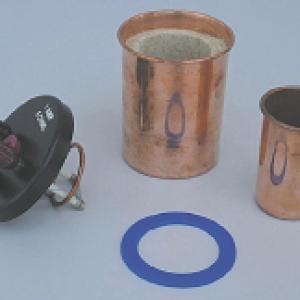
Copper calorimeter of size 63 x 63 mm enclosed in an outer vessel of 80 x 90 mm size, with lid having terminals, a heating coil suitable for 3-6 V supply and holes for thermometer and stirrer, nickel plated. With stirrer but without thermometer.Robust Construction for Reliable ResultsFeaturing a sturdy copper or brass vessel surrounded by a wooden insulating box lined with felt, this calorimeter is engineered for durability and effective thermal insulation. Its double-walled design minimizes heat loss, ensuring highly accurate calorimetric measurements even in fluctuating room conditions.
Easy-to-Use Design for Laboratory ApplicationsWith a manual control system and no external power requirements, the Joules Calorimeter is simple to operate. Direct measurement involves mixing substances and reading temperature changes, making it accessible for students and educators. The inclusion of a stirrer facilitates uniform mixing, contributing to more reliable experimental outcomes.
Comprehensive Accessory PackageEach set includes a copper calorimeter vessel, precision stirrer, wooden insulating case, and a lid with two holes-ready for standard immersion heaters and thermometers (not included). The brass terminal allows secure connectivity for electrical experiments, expanding its versatility in various heat transfer and calorimetric studies.
FAQ's of CALORIMETER, JOULES:
Q: How does the Joules Calorimeter with stirrer measure heat transfer in experiments?
A: The calorimeter operates by mixing a known quantity of hot and cold substances in the copper vessel, then recording the temperature change with an external thermometer (not included). The heat exchanged is calculated based on the temperature difference, the mass of contents, and their specific heat capacity.
Q: What materials are used in the construction of this calorimeter?
A: The inner vessel is crafted from copper or brass for optimal thermal conductivity, while the exterior features a double-walled wooden insulating box lined with felt. This construction reduces heat exchange with the surroundings, enhancing measurement accuracy.
Q: When is this calorimeter most effective for use?
A: This calorimeter is ideally used in educational and research laboratories for heat study experiments, such as determining the specific heat of materials, demonstrating thermal equilibrium, or measuring the energy output from an immersion heater.
Q: Where can this calorimeter be utilized for best results?
A: It is best suited for physics laboratories, educational settings, and practical demonstration environments where precision heat measurement and safe, manual operation are priorities. Its design also supports field studies where electricity is not available.
Q: What is the process for conducting an experiment with this calorimeter?
A: Begin by placing the sample in the copper vessel, insert the thermometer and stirrer through the lid's holes, and, if required, connect the immersion heater to the brass terminal. Mix substances, monitor temperature, and record data to calculate heat transfer using standard calorimetric equations.
Q: How does the double-walled insulation benefit users?
A: The double-walled wooden case lined with felt significantly minimizes heat loss to the environment, ensuring that the majority of thermal energy transfers occur within the vessel. This feature helps achieve more precise measurements during calorimetry experiments.







 English
 Spanish
 French
 German
 Italian
 Chinese (Simplified)
 Japanese
 Korean
 Arabic
 Portuguese


 Send Inquiry

