Product Description
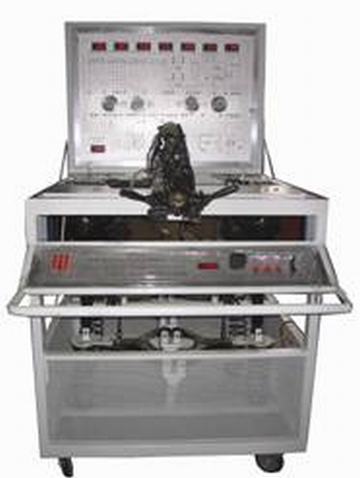
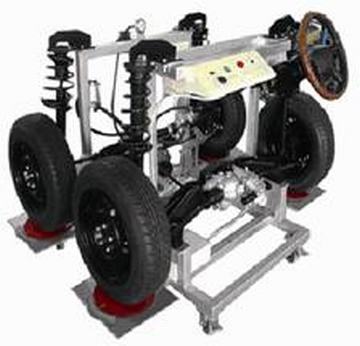
ELECTRIC SUSPENSION FORK AND STEERING EXPERIMENTAL PLATFORM
Description:
Teaching Function:Students can understand the structure and working process of electric suspension fork. They can get hold of diagnose and test methods.Standard Configuration:Adopt original plant accessories, including sensor, actuator and controlling computer. Pointer pressure gauge shows pressure of every gasbag. Digital electronic watch shows the height of every suspension fork.It can simulate running status on all kinds of roads (load, decrement of load, acceleration, brake, and steering and bump road).Diagnose connections are configured to connect testing equipment special for motor vehicles. It is configuredwith computer diagnose terminators to test voltage signal.
Advanced Measurement and Simulation CapabilitiesSupporting manual and automatic test modes, this platform integrates linear position, load, and angle sensors to facilitate precise measurement of suspension and steering parameters. Dynamic caster and camber readings are possible while simulating diverse road and steering conditions, offering valuable insights for researchers and students.
Optimized Design for Versatile Research and TrainingEquipped with a modular rectangular base, universal clamps, and heavy-duty lockable wheels, the platform easily accommodates different suspension types and ensures mobility within any laboratory setting. Its robust stainless steel and high-strength alloy construction ensures durability for repeated educational or research applications.
User-Friendly Control and Data AcquisitionA digital control panel and LCD display make operation intuitive, while real-time data can be exported via USB or RS232, enhancing data analysis. Adjustable load settings, speed, and fault simulation provide additional flexibility and realism for comprehensive suspension system study and testing.
Comprehensive Safety and Operational RangeWith safety features including emergency stop, overload protection, isolation barriers, and an acrylic protective cover, users are safeguarded during operation. The platform functions efficiently within temperatures of 0-40C, maintaining noise levels 60 dB for a suitable laboratory environment.
FAQ's of ELECTRIC SUSPENSION FORK AND STEERING EXPERIMENTAL PLATFORM:
Q: How does the Electric Suspension Fork and Steering Experimental Platform simulate real-world road and steering conditions?
A: The platform uses integrated sensors and an adjustable digital control panel to replicate various road and steering loads, allowing users to switch between manual and automatic suspension test modes. This simulates dynamic environments and ensures comprehensive testing for both educational and research applications.
Q: What types of suspension systems can be tested on this platform?
A: Thanks to universal clamps and modular mounts, the platform can accommodate a wide range of suspension setups, making it suitable for different research, training, and educational applications involving various suspension fork types.
Q: When should I utilize the manual versus automatic test modes?
A: Manual test mode allows for precise control over testing parameters, ideal for demonstration or specific experiments. The automatic mode is best for standardized, repeatable testing or when conducting batch experiments for research consistency.
Q: Where can data output from the experiment be accessed and exported?
A: Experimental data is available in real time on the integrated LCD digital display and can be exported for further analysis using either the USB or RS232 output options, facilitating comprehensive evaluation and reporting.
Q: What is the setup process for installing different suspension fork types on this equipment?
A: The platform features universal clamps and adjustable mounts, enabling quick and secure installation of different suspension forks. The user manual provides detailed, step-by-step instructions for mounting and calibration to ensure accurate testing.
Q: How do the safety features ensure secure operation for users?
A: Safety is prioritized with multiple features, including an emergency stop button, overload protection, isolation barriers, and an acrylic protective cover to prevent accidental contact with moving parts during operation.
Q: What are the main benefits of using this platform in educational or training environments?
A: The platform offers hands-on learning with real-time data acquisition, dynamic simulations, and fault simulation features. Its portability, robust construction, and user-friendly controls make it a versatile tool for teaching, skill development, and in-depth automotive research.







 English
 Spanish
 French
 German
 Italian
 Chinese (Simplified)
 Japanese
 Korean
 Arabic
 Portuguese


 Send Inquiry

